Greeting fellow wargamers! Caleb with White Metal Games here with another tutorial.
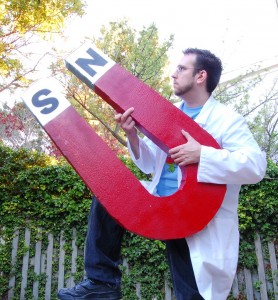
Magnetizing can be a daunting part of the hobby to jump into. Magnets seems to offer the perfect solution to the continued inflation of the prices of our favorite miniature games . . . limitless options for seemingly very little work. However, there are tons of issues you DON’T consider when you first start magnetizing. Namely where to sink the magnets for maximum effect, how to avoid just gluing a magnet in place and ending up with an an unaesthetic model, as well as issues with polarity and making sure you get the magnets put on the right way.
Whew . . . with all that to worry about, no wonder folks stay way from magnets. When I first started magnetizing models, I was daunted too. I started experimenting with other means of magnetizing models, and I’d like to present you with some of those findings today. Now I’m not saying that what I am presenting will replace your magnetizing ambitions. However, this is just another tool to add to your gaming arsenal for use in the future if and when the need comes up.
Anyone remember this popular game when you were a kid? Wooly Willy!
I sure do. Even wonder how it works? Of course not! You’ve got better things so do with your day!
So when why am I bothering to bring this up? Well, Willy can teach us a few things about magnetization! Yes indeed! You see Willy’s ‘wooly’, that stuff that looks like black sawdust is in fact Iron Shavings. And the reason this puzzle works is because there is a magnet on the stylus.
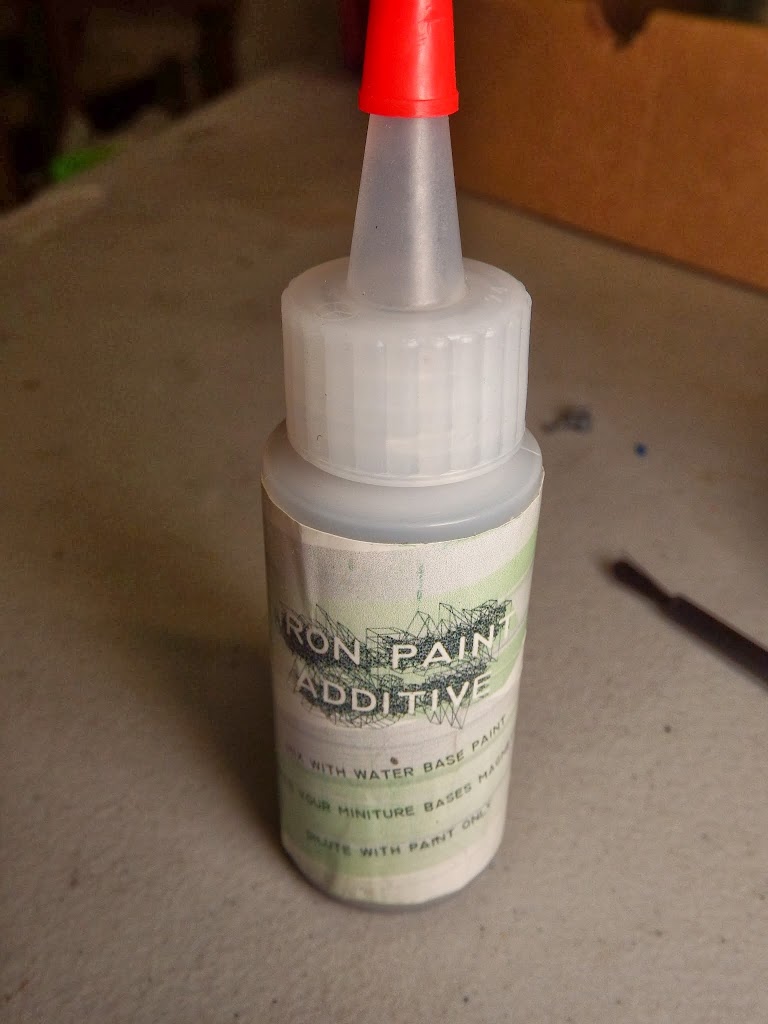
So what are iron shavings? Iron Shavings/Filings are just what they sound like: sort of the equivalent of sawdust in the Iron industry. The idea to use them for magnetizing occurred to me a few years ago and I’ve been experimenting with it off and on ever since.
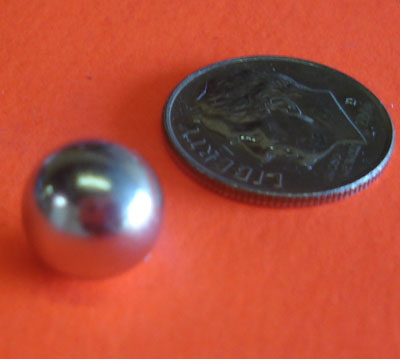
You can buy Iron Shavings all over the internet, but you can also get a pretty good deal on them here. This site also offers some bulk orders here. In addition, this company sells tons of different sizes of Steel Balls, which are very useful for when you need a sphere for magnetizing but don’t want to pay the exorbitant prices of sphere magnets.
In addition to regular iron shavings, I’ve also experimented with a product called Magnahold. You can purchase Magnahold here.
Magnahold is a ferrite (iron) additive. It claims that when mixed with paint and applied to a smooth surface that it will make the surface attractive to magnets. In the case of a weak connection, it suggests adding an extra layer OR using a stronger magnet.
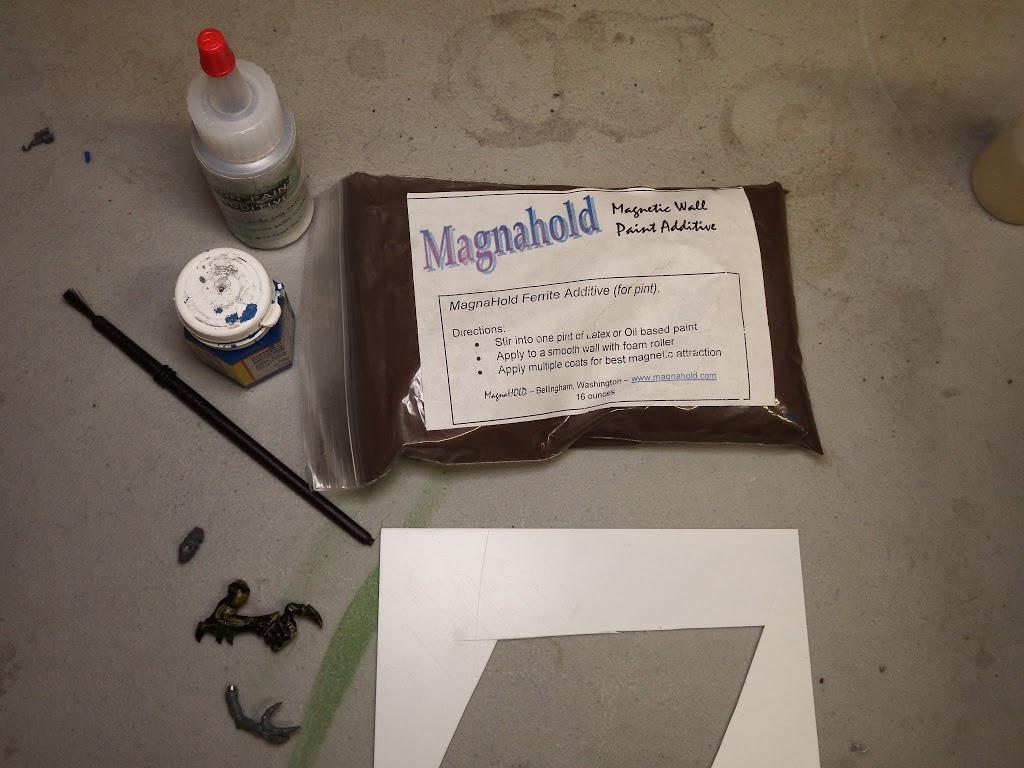
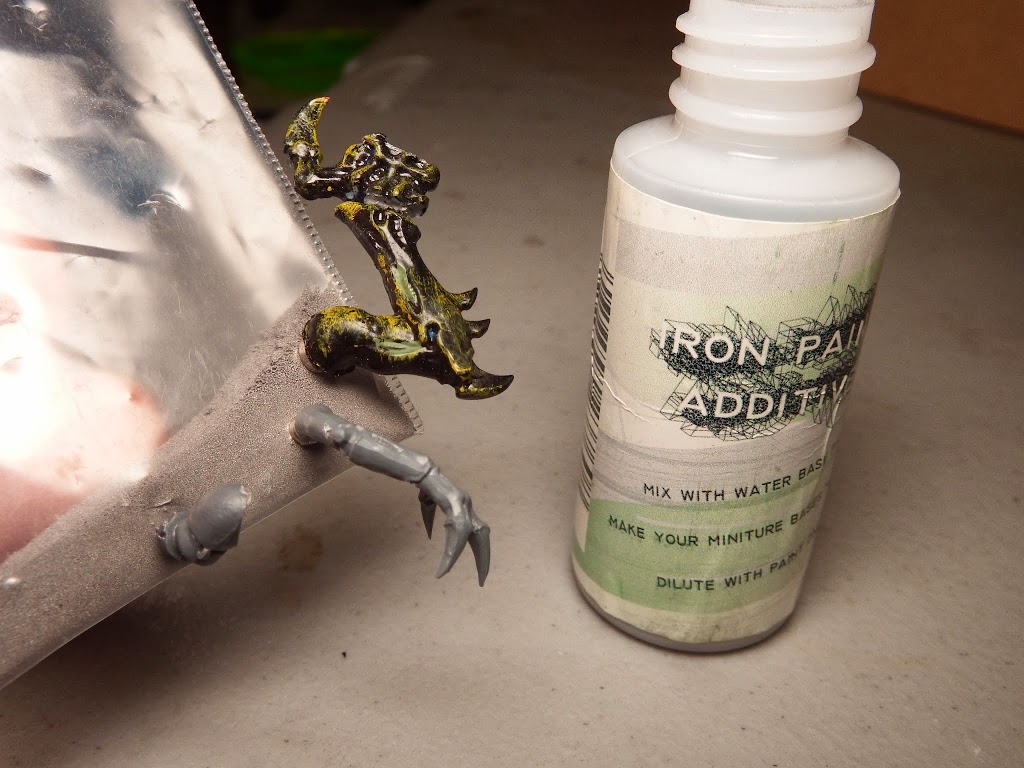
I bought a bag of Magnahold that was intended to be mixed with a Pint (16 oz) of Paint. Of course I wasn’t planning on using all of it at one time. For the purpose of this tutorial, I decided to compare Iron Shavings (generic) to Magnahold to see which held a better connection to several magnetized plastic limbs.
So, I gathered some supplies: the additives, some paint and brushes, and a sheet of plasticard. Eventually I switched over to a paper plate instead of plasticard. I also magnetized a few limbs.
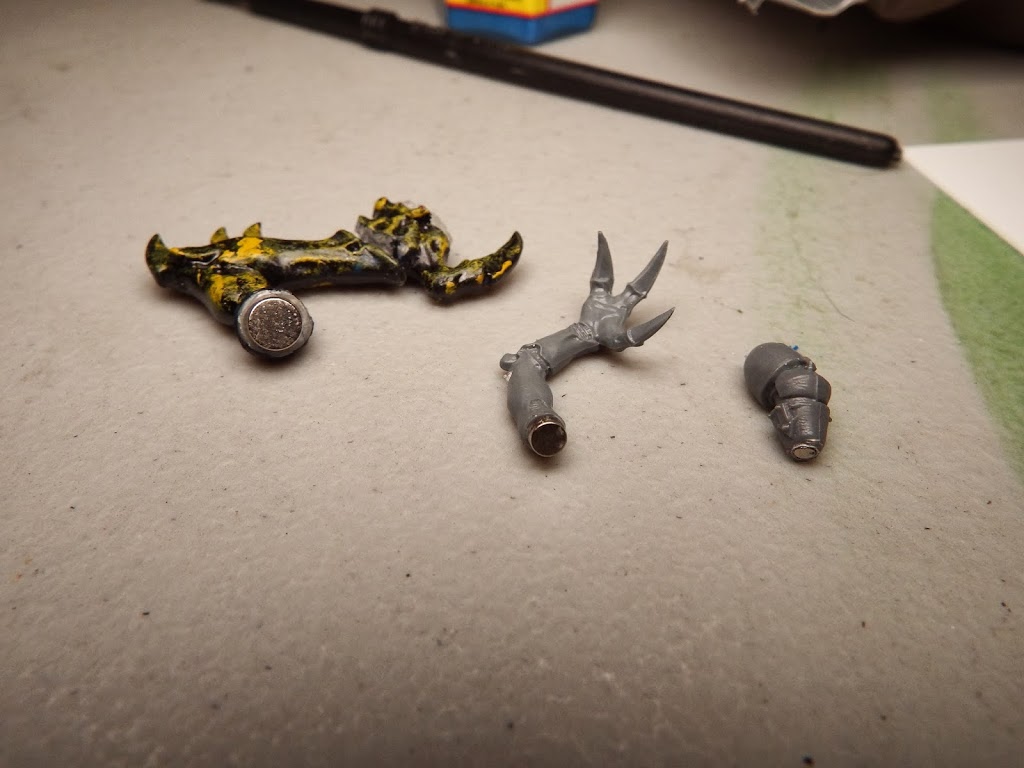
For the purpose of this tutorial, I really just glued magnets on the ends of the arms, with the exception of the space marine arm where I actually drilled out a spot for the magnet.
As you can see here, even through the bag the magnahold has a pretty firm grip on the magnets. And that’s through a thin layer of plastic!
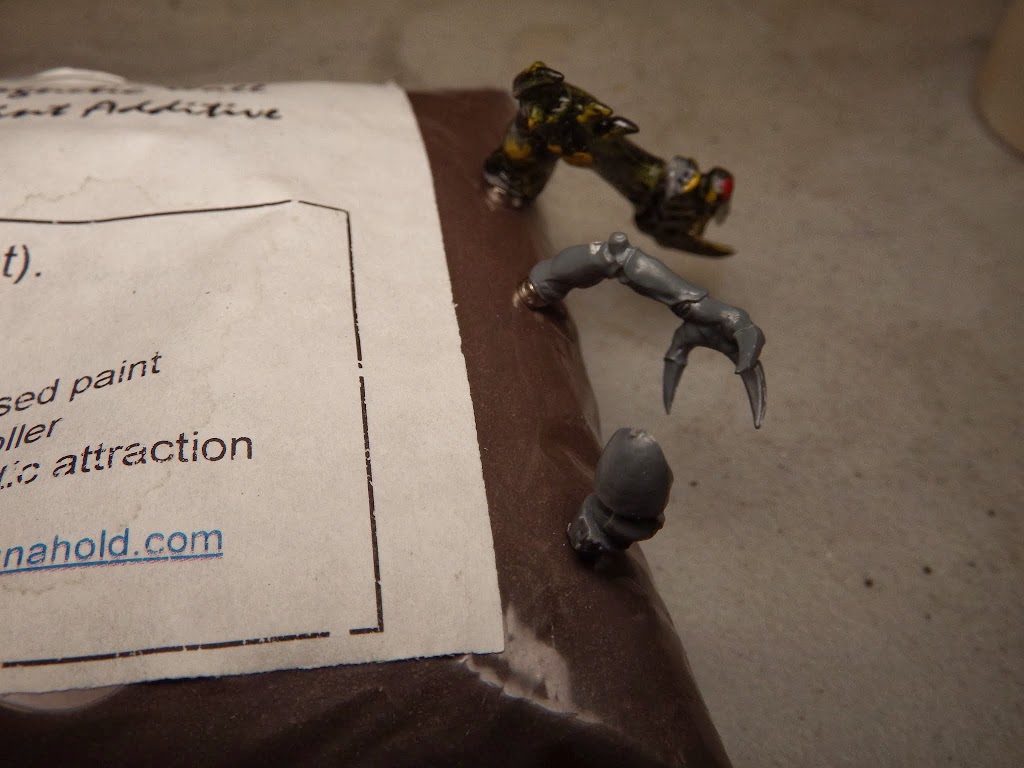
I felt like it was only fair to try it with the iron additive too, so I put some IA in a baggie and did the same. As you can see, there was a similar effect.
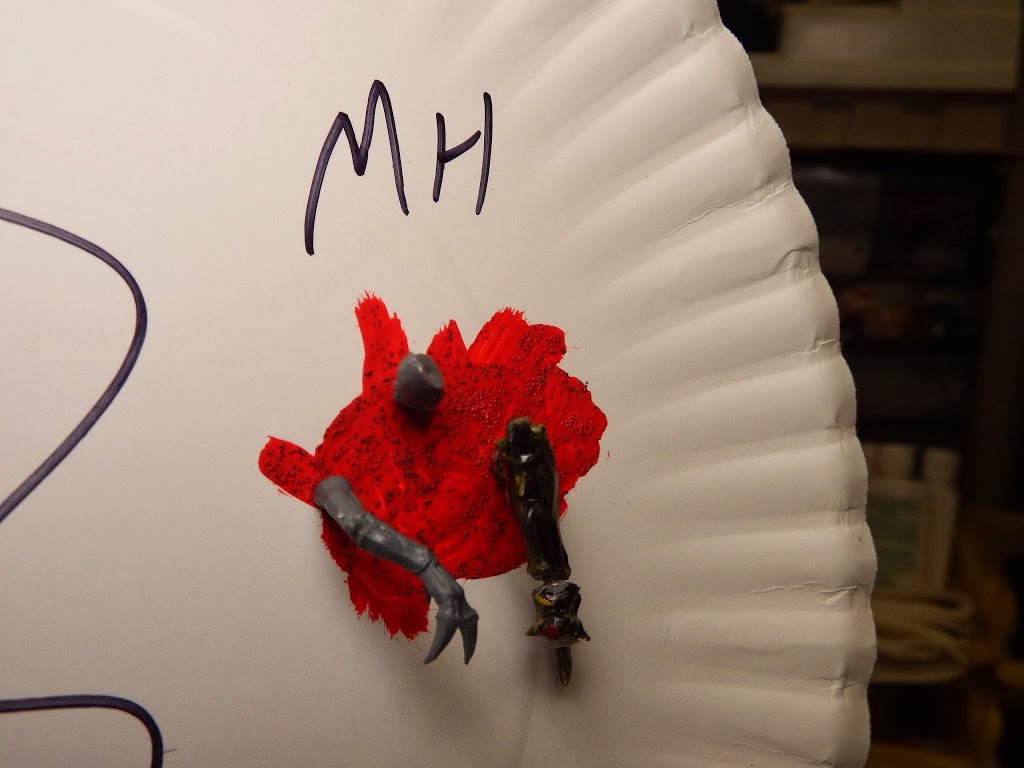
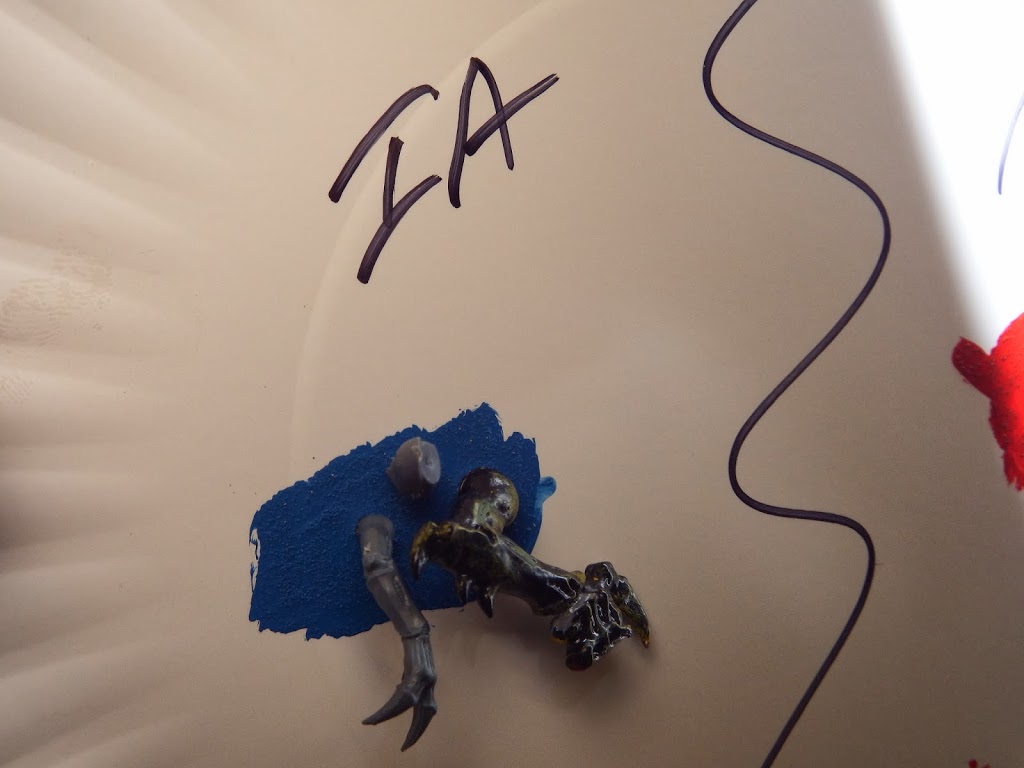
To keep everything on an even playing field, I started with a 1/1 ratio of paint to additive. I mixed it together, thoroughly. The Iron Additive is in Blue and the Magnahold is in red.
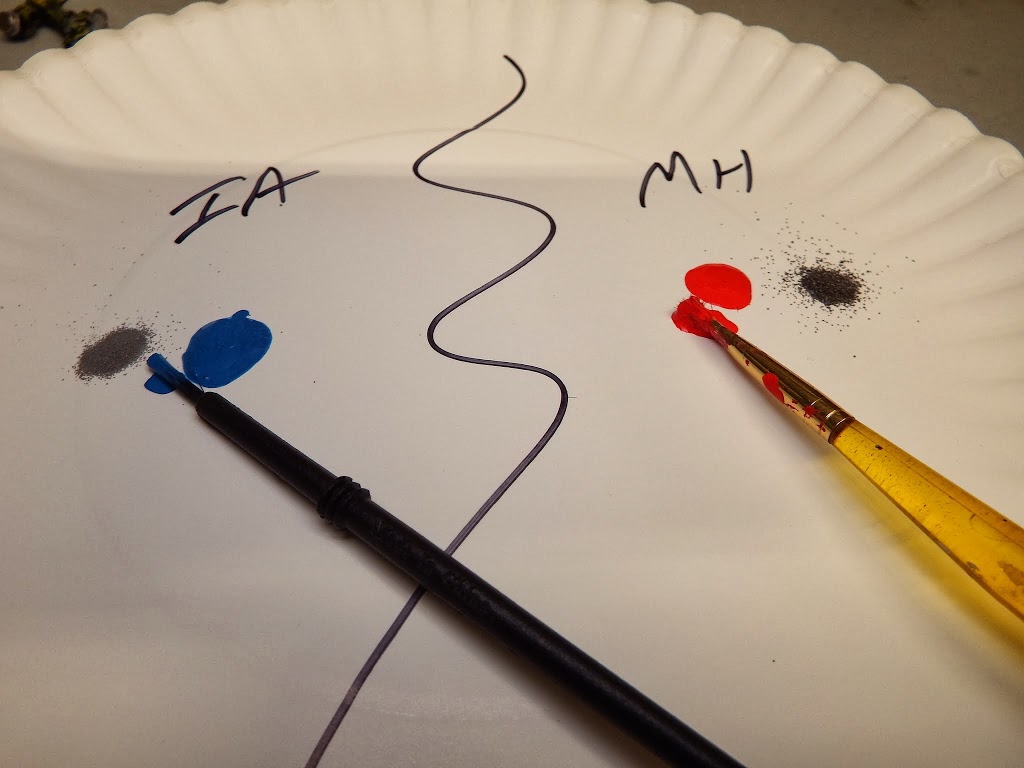
After thoroughly mixing the additives I could already tell a slight difference. In the above case, the Iron Shavings are of a much finer gradient than the Magnahold.
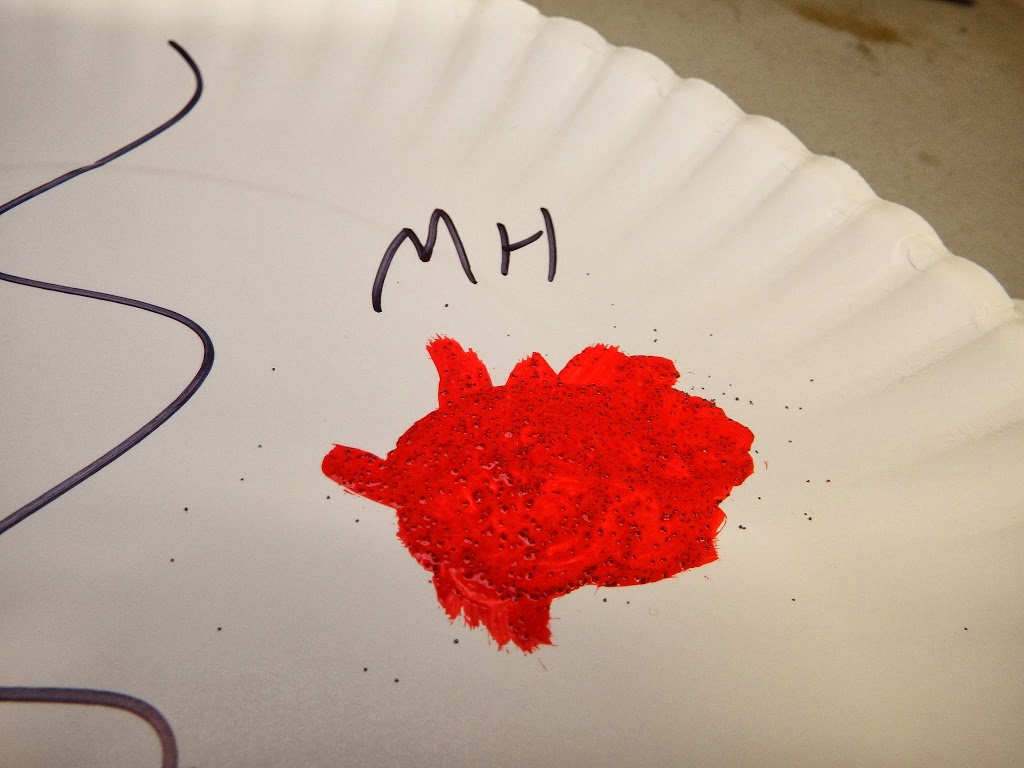
They were able to be mixed more thoroughly. As such, they seem to create a firmer hold on the magnets. It is very clear that the more concentrated the area of the Iron Additive, the stronger the magnetic hold.
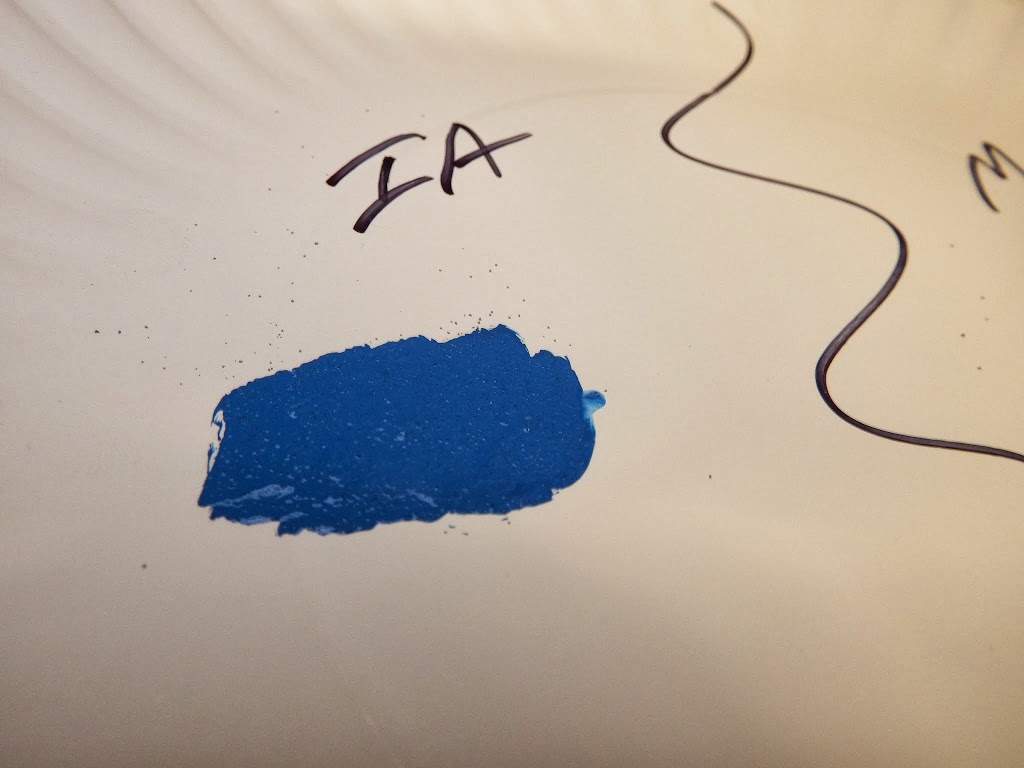
It’s not that the Magnahold didn’t work, I just felt like the Iron Additive had a stronger connection, likely due to it’s denser concentration.
Final Conclusions:
Although Iron Additives are a suitable replacements for magnets, they never reach the strength of a true magnet on magnet connection, however, they do bypass the polarity issues, making them an ideal enty point for newcomers to magnetization.
Iron additives are ideally suited for small limbs, such as Resin or Plastic. The finer the grain of the additive, the denser it can be applied to an area, and thus the stronger the connection between it and the magnet.
In addition, Iron Additives such as Magnahold could be a reasonable alternatives when magnetized host points are too close together and the magnets are trying to rip each other out of their respective sockets. For example Tyranids often feature ball and socket joints very close together, and polarity is ALWAYS an issue in these areas as the host magnets often try to pull each other out of their respective sockets.
Due to the gritty nature of the iron additive, it is advisable to use paint as an application medium, but limit the application of the additive to areas that will rarely be seen by observers, such as ball and socket joints and underslung areas on a model.
Also AVOID using superglue to apply iron additive to a model. In tests it tended to clump and application was very difficult. Paint seems to be the ideal delivery method as it’s slow dry time ensures you can apply the additive wherever you like.
If you found this tutorial useful, be sure to check out more of our work on our homepage, or at the very least, like us on facebook! We also have a new podcast called Warcouncil where we share other cool hobby tips! And you can see more tips through our Youtube channel!

Until next time, PUT YOUR MINIS WHERE YOUR MOUTH IS!
Starting out in the miniature painting business is no easy feat . . .
Dear Reader:
What follows is a conversion between myself and the owner of a new prospective painting service called Terran Commissions. The painter contacted me a few weeks ago for help with developing their painting service, establishing rates, and how to reach out to the community. I was surprised by some of his questions and I felt that if this painter had questions, perhaps other would be painters out there do too. So, in the spirit of community, I thought I might post our discussion, chock full of advice for new painters, so that if they have questions but feel silly about asking them, perhaps they can learn from Alex’ example.
I was flattered that Alex would think to contact me, and while I wouldn’t consider myself an expert by any means, I have done quite a bit of research about other painting services, including outsourcing a few projects just to get the feel of being a client.
This conversation is being presented in it’s entirety. When the painter contacted me, I was both surprised and inspired to help them. I felt it was my duty in the community to help a fellow painter get their bearings.
FROM ALEX TO WHITE METAL GAMES:
To whoever it may concern As of a few weeks ago i set up a commissions “business” and have done everything i can to spread the name Terran Commissions using facebook, flyers, friends, youtube and so far i’m having no luck in finding people who are interested. I’m not one for self flattery but my painting skills is pretty high and my prices are fare (unless its a character model you’ll never pay more for the commission then you did the model) but because times an issue due to school i can only take on small jobs. I guess the purpose of this email is to ask for advice in both getting started and spreading my name any help at all would be greatly appreciated. thank you for your time. A.H.
FROM WMG TO AH: Hey Alex: This is Caleb with White Metal Games. Thanks for touching base regarding your new service Terran Commissions. Congratulations on the first step to running a new commission service. Just by looking over your Facebook page there are a few things I can tell you right away.
Firstly, and perhaps most importantly, I don’t see many pictures of your painted models on your facebook page. There appear to be 3 pictures of some Dark Mechanicum figures you did about halfway down the page, and they are all out of focus! There are far more pictures from Games Day and those are in perfect focus! This is confusing because if you are the one taking the pictures, why wouldn’t the pictures of your display models be the ones in focus? If I come to your website and want to look at your models, it would be ideal if I could see the product.
Secondly, I have no idea how much you charge for your services, or what services you offer. In addition, the only samples of your models I see are these three Dark Mechanicum models previously mentioned. What if I want some Ork Boyz, or Tyranids, or Ultramarines? Do have samples of those, or something remotely similiar? In order to get more clients you’ll have to show more examples of your works, including price estimates for have similar models done. Do you charge for assembly and painting, how much is shipping, etc.
Try to put yourself in the buyers shoes . . . if I came to your FB page, could I easily tell?
What you charge?
Examples of your work?
How to reach you?
You have a link to some youtube videos but every video has text over the pictures of the models, so I can’t see the models at all. This is like going to a movie with someone talking on the phone the entire time. I can’t pay attention to the pictures.
Finally, I don’t have any idea who you are as an artist. Too many commission artists are camera shy. If I’m going to send you $$$ for painting, I need to see a real person from time to time. So get in front of the camera, introduce yourself to the world, and talk about what you are offering, your services, prices, how long you’ve been painting . . basically why I should pay you to paint my models?
Also consider branching out away from the 40k Safety net. There are tons of other games out there and your clients won’t always play the same games you do. I realize that being in school you have limited time and resources. So maybe for the next few years, just work on improving your technique, creating samples of your work and posting them to your FB page, painting a few models for your friends and local gamer buddies, go to a few GT’s to showcase your work and build your service SLOWLY. The last thing you want are more orders than you can handle and then to burn out on commissions. It happens and it separates the hobbyists from the pro-painters out there.
With your permission, I would be happy to publish a version of this letter on the WWW, through BOLS, which would bring attention to your service, however, I would be using it as an example of how to improve a painting service when you are first getting started. I wouldn’t consider doing this without your permission, so consider whether you’d like 15 minutes of fame, but with a bit of public trolling on the side. I think this would be a good example of what new services should learn from these sorts of experiences.
AUTHOR’S NOTE: After waiting almost a month, this article was overlooked and passed over by BOLS. Therefore I am pubilshing it via Spikey Bits.
FROM AH TO WMG:
First of all Caleb thank you for getting back to me so quickly.
After reading through the advice you’ve given i’m happy to say a lot of it can be sorted sooner rather then later with lighting issues and blur sorted after getting my camera looked at, a video camera being ordered so that I can get some proper videos up of my product and maybe one or two videos of myself painting and of course specifying prices but there are one or two questions I have. Most important is how do I set up a fair pricing system so that i’m not over charging but also so that i’m not losing money due to shipping or buying paints and equipment needed for specific jobs and should i ask for money up front or wait until the orders sent back. Another issue is losing the 40k safety net as other then a few warhammer fantasy models i’ve never actually painted anything else from other ranges so i’m kind of in the dark on what else is out there, what to expect and will the GW paint range work for everything. A small thing but an issue all the same is what exactly does GT stand for, sorry im bad with short hand. As for your side note I have no problem with this letter being published on BOLS, I would however like to request once its posted that you’d send me a link once its posted,
FROM WMG TO AH: Hey Alex: GREAT! I think your example will be a wonderful learning experience for the community as a whole. Thanks for allowing me to post our discussion on BOLS. As per your questions above. there are sadly no perfect answers to any of them. Most services charge, on Avg. around $10 per Infantry figure painted. This cost normally allows for a small stipend to be put towards equipment and supplies like paints, brushes, lighting, etc.. This is assuming an infantry figure is based on a 20-28mm base with some details but not character level detail. A good example of this might be a space marine or ork.
Character models run upwards of $20-$40 usually or more, and vehicles range widely. There is no rhyme or reason. Some services offer speed painting and dipping services, others only paint to the highest level or standard. There is no primary metric for how a painting service should be priced.
However, in our research we generally found that painters charge more depending on lots of factors, including: Overhead cost, experience/years behind a brush, personal opinion of their own work, etc. Some services offer to match any price. Most of these are college kids that paint to earn a few extra bucks in school. These services generally disappear after a year or two and just sort of disrupt the entire pond of painting services. None of us want to race to the bottom. If one service lowers their prices too much, it generally hurts us all because expectations for pricing become unrealistic.
When you are first starting out, you can quote lower, because you are frankly not very experienced. So you charge less than the average service to get some commissions under your belt. You build up a gallery. Then you start getting inundated with work and sometimes more work than you can handle. This false sense of promise is usually the time many services buckle because you are pricing yourself out of work, offering your services for too little. So when this starts to happen, raise your rates a little. Not too much, just enough to weed out your lowest tier clients. They will sadly either have to step up to match your painting prices or find the new Johny come lately painter. There are dozens or them out there.
GT means GRAND TOURNAMENT. For me, I am an average player at best most days. So when I go to GT’s I bring a list that isn’t overly competitive but gives me a chance to showcase my painting and conversion skills. Got a new model to show off? Bring it! Stick it in your list even if it doesn’t help you win. It will help you get new business and that’s a win! This is just my opinion, because lots of painters run successful painting services and also kick a little ass!
As far as the 40k Safety Net . . . it’s not as safe as you think. You probably paint 40k stuff because it’s a game YOU play or played. That’s how you got started right? Me too. Here’s the problem. Your aren’t just a player anymore. Now you’re a businessman. If I went to a movie theatre and they were only showing one flick, you think I’d watch it more than once? Heck no! On a hillside of yellow boxes, you’ve got to diversify!
Once you start to develop a style if you haven’t already you’ll learn which models in which ranges you can paint best and you’ll gravitate towards those models. This isn’t a bad thing, since we want to show where we shine. But dont’ be afraid to paint a model from time to time that won’t showcase your talents, just to get some experience and learn some new techniques. “They” say it takes about 10k hours to master a talent. For me, I’m not anywhere close and I’ve been at this for years.
IMHO, the more expensive 40k and Warhammer get, the fewer clients I get for those games. If a potential client has $100 bucks a month to blow on models and they buy a $75 Heldrake, you think they’re going to spend that last $25 to hire me to paint it for another $75 bucks and go another $50 bucks into the red? No way! They’re going to buy some new brushes, paints, and glue and paint it themselves or hire Joe Blow Gamer in the shop to do it for the $25. Unfortunately Joe Blow will wise up fast and raise his rates.
In an age of kickstarters, there are new gaming systems being released all the time. These new models are going to need painters to paint them. So consider buying a few models in popular games like Infinity and Warmahordes, Flames of War or whatever the flavor of the week is at your FLGS . If the owners have a display case, ask if it would be okay to display some of your models in the case with a business card. Which reminds me, get a box of business cards! For $20 bucks it’s about the best investment as a painter you’ll ever make.
Consider spending some time at that same FLGS with a stack of said business cards on the table beside you while you paint or convert a new model. Answer questions, be friendly, and smile! Remember, these folks walking around the shop are your new client pool, so treat them well!
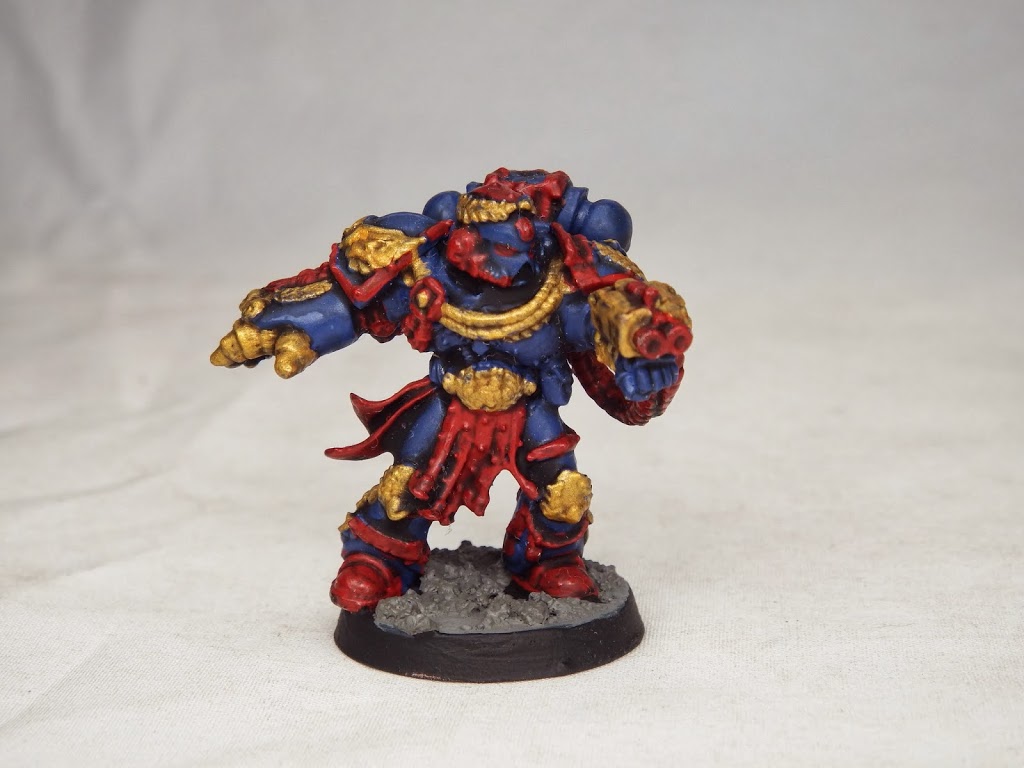
And there you have it, all my painting wisdom summed up from years of experiences in a few short paragraphs.
Here’s hoping it helps the next generation of painters
Caleb
AUTHOR’S NOTE: I checked back on Alex’ site after a month, and I’m happy to report he now has TONS of new pictures posted, including some from the Warmachine line of models. He also posted some rates on the ‘about’ section of the page, and it seems like he even got a commission or two booked! Keep an eye out for Alex, guys, and maybe if you like his Dark Mechanicum, book a project with him! Let’s help the guy out!

If you thought this conversation was helpful, then do us a favor and LIKE US on facebook, or subscribe to us on youtube. It really helps us to grow as well. =)
Be sure to check us out online to see our growing gallery of over 10,000 images and of course be sure to
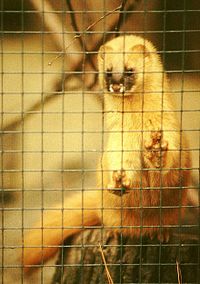
Greetings fellow wargamers! Caleb with White Metal Games here! You can’t paint a miniature without hear about the quality of the kolinsky-sable line of brushes. Generally speaking these are thought of as a Roles Royce of painting brushes. But then I began to ask myself . . . why is that the case? Why are these brushes considered so great, and what the heck does Kolinsky-Sable mean? The answer might surprise you. But before I answer that, let me ask you this . . . how many of you stick your brush in your mouth from time to time? I know I have. Well, I might not be so quick to do so again. Ostensibly there is no such thing as a Kolisnksy-Sable. Here’s why: The Kolonok (hence Kolinsky) is a Siberian weasel native to parts of Asia, highly prized for its fur, in particular by . . . you guessed it . . . the paint brush industry. And before you worry, the kolononk is not currently at risk for extinction.
.
The sable is a close relative to the weasel. Sables live in Russia, Siberia, Kazakhstan (yes, it’s a real place), Mongolia, China, Korea, and Japan, and is historically prized for its fur. Red Sable is obtained from any weasel with “red” hair, but ironically NOT from the animal known as the sable. A quality pure red sable brush is a good alternative to the more expensive Kolinsky with similar performance and durability. Kolinsky brushes are packaged as ‘Kolinsky Red Sable’ or just ‘Kolinsky’ while the name ‘Red Sable’, ‘Fine Sable’ or ‘Sable’ is reserved for non-Kolinsky brushes made from the hair of other animals in the weasel family. Kolinsky-Sable Brushes in fact contain no sable hair at all. The finest K-S brushes contain all male kolonsk fur, but many K-S brushes contain as much as 40% female fur. The hair used is primarily from the tail of the kolonosk, which is the bushiest and most responsive; because of its strength, spring, and ability to retain shape (“snap”), it is considered the finest fiber for brushes in the world. If properly cared for, it will last for many years.
The Kolonosk is known for being able to thrive in freezing wet conditions. Their fur was an evolutionary improvement because it would easily release all the moisture it held. The brush is great for what it releases rather than for what it holds, and the hairs are stronger than any sable or ermine hairs which are too soft and break easily with heavy use. Kolinsky bristles tend to be pale red in colour with darker tips. The weasel is not an animal that is raised well in captivity, and is generally isolated to the geographical region of Siberia. Due to this difficulty in harvesting the hair, and the fact that other natural and artificial bristles are not comparable in quality, these bristles are extremely valuable and consequently expensive.
It should be noted that some believe it is unwise to use K-S brushes with acrylic paint due to the nature of the polymer emulsion that eventually dries out the hairs and causes them to break. However, simple application of some brush soap or even a little shampoo/conditioner will help to restore the brushes luster.
So, there you have it, more than you ever wanted to know about Kolinsky- Sable brushes and their origins.
But how do they perform? Well, for that you’re just going to have to try them out yourself. Spend a few extra bucks and pick up a K-S brush and then you’ll really be able to . . . you guessed it . . .
PUT YOUR MINIS WHERE YOUR MOUTH IS!!!
Caleb White Metal Games
Psst . . if you found this article useful, give us a like on facebook, or at the very least, check out our latest happenings on youtube. Or give us a listen on Warcouncil if you have the time!
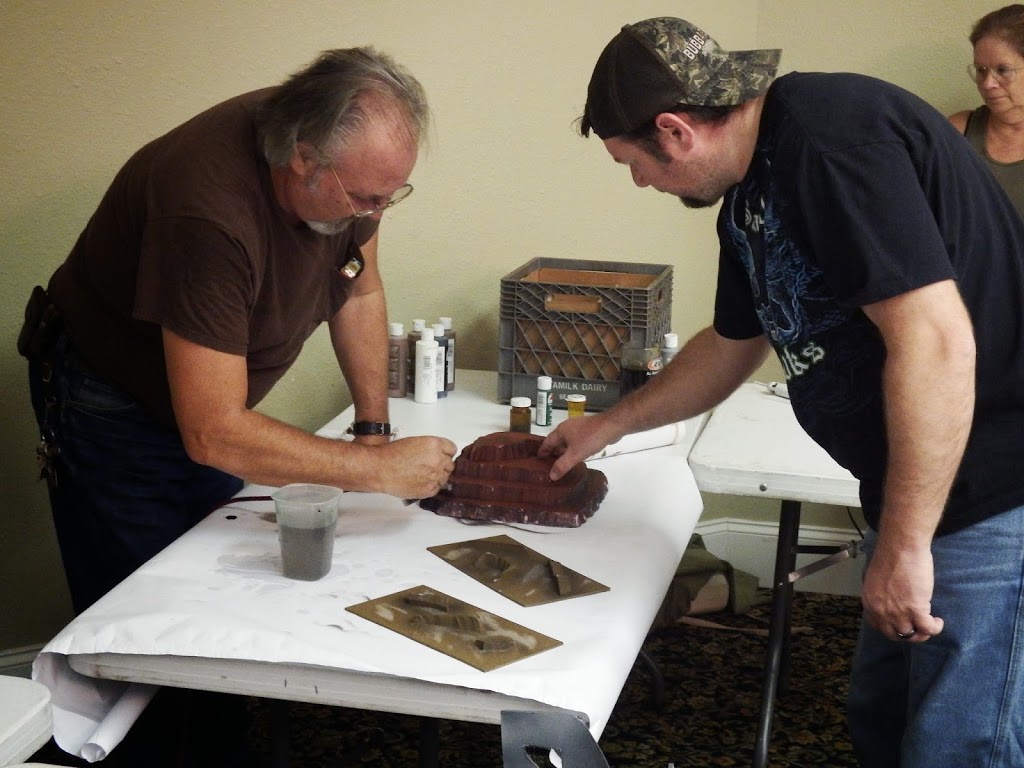
For those of you that know me at all, you know that I’m not much of a competitive guy. However, I am always looking for new venues to showcase the studios work, so when I contacted Neil at the 11th Company about their GT in sunny Myrtle Beach, his advice to me was ‘Bring a Painted Army and come play!’
Well, I took half his advice. In a strange turn of events, three armies that I had been trying to sell suddenly sold in the two weeks before the GT. So it was with lament I suddenly found myself without a painted army in sight. I had plenty of odd figures, sure, a daemon prince here, a squad there, but nothing like what I would normally want to showcase. My plan up until that point had been to bring a painted army, but with the trip fully planned and paid for, I said the hell with it. At least I’ll have a good time. So I snagged every figure I could that would showcase our conversion work, and got in the car, bound for the golden shores of South Carolina.
To preface my tournament experience, allow me to set the stage: I’ve been to less than a dozen tournaments in the last few years, preferring to stay behind the scenes when I can. I’m not a competitive player by any stretch of the imagination, and other factors like cost, time away from home, work, etc often deter me from taking trips like this (in fact, I had to leave early, as you’ll see below). However, over the last few months I have reoriented my business plan to attempt to establish myself in the ‘community’ at large and to do that I have to get out there, shake a few hands, kiss a few babies, etc.
So it should come as no surprise that this was my first GT. Part of my desire to attend the 11th Co GT was simply to see how a tournament this large is ran. And while most of it will seem like common sense, seeing how the sausage is made is always interesting.
For starters, Neil and his crew did a good job of keeping people in the know with a series of newsletters released week after week as the GT drew near. Simple issues like rules clarification (FAQ type stuff, and in particular the allowance of the new SoB . .err . . Adeptus Soritas), number or attendees signed up, prize support, etc. were addressed en masse. Inadvertently, this helped me to get excited about the GT, since I was getting so many updates about it.
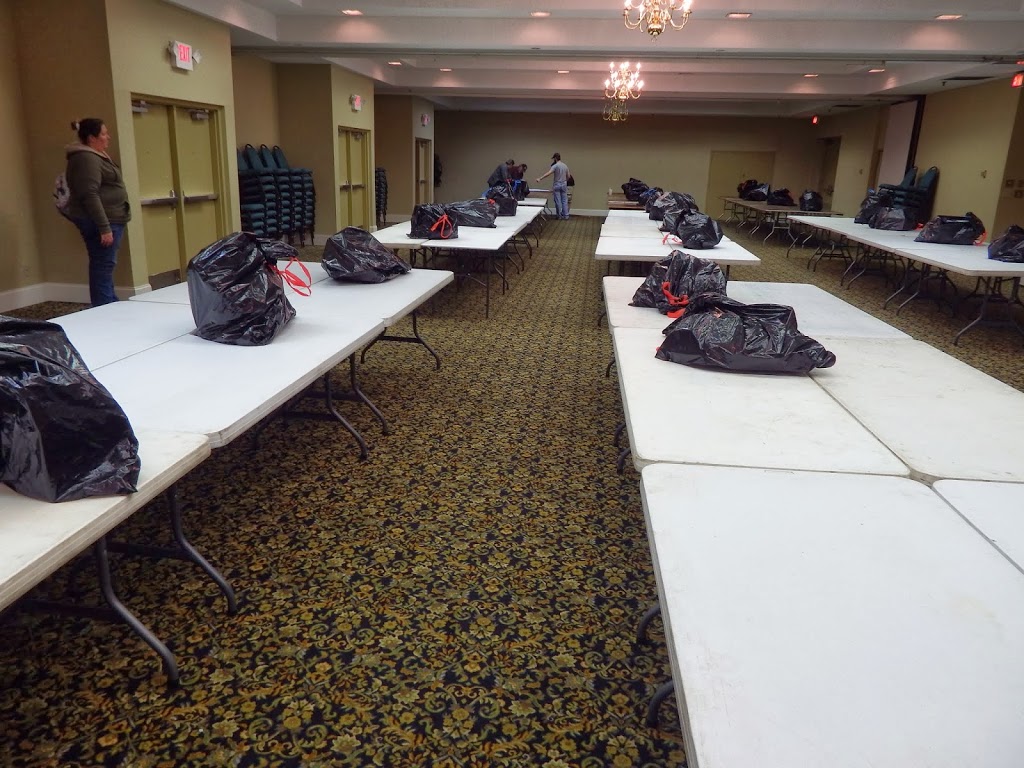
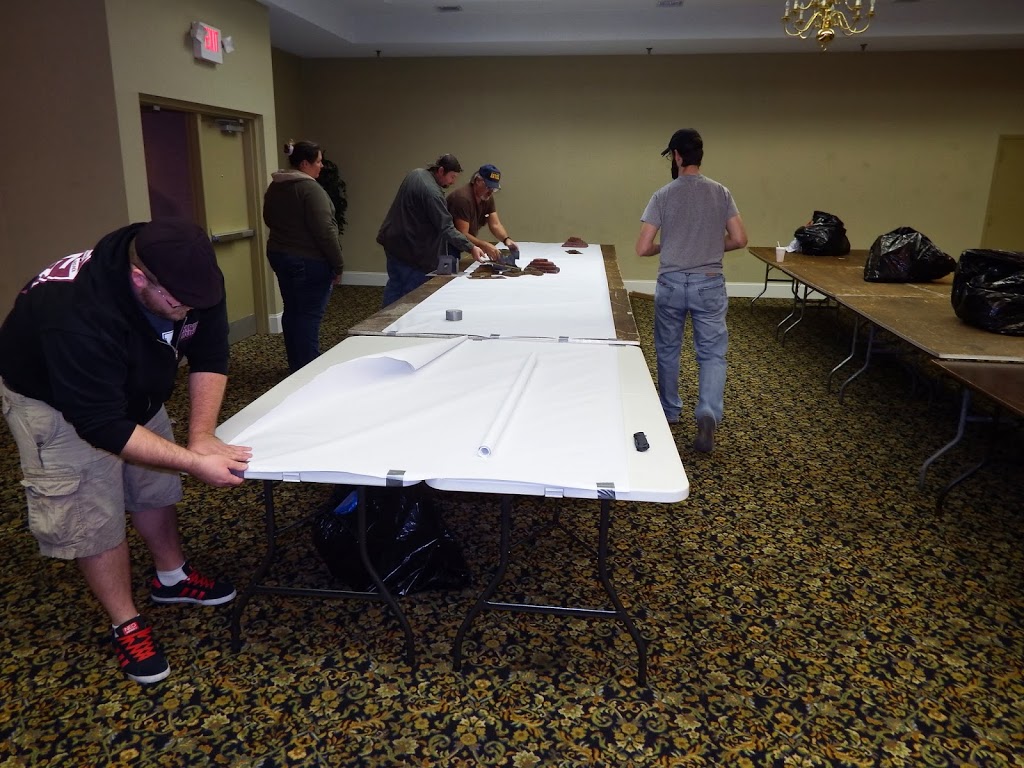
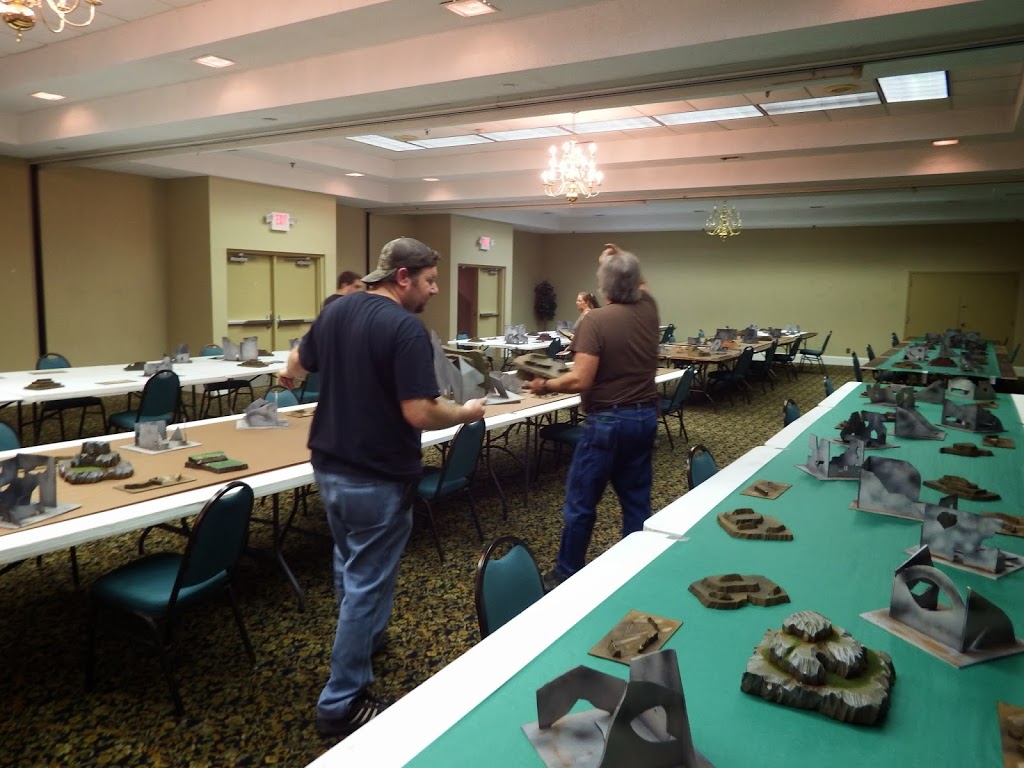
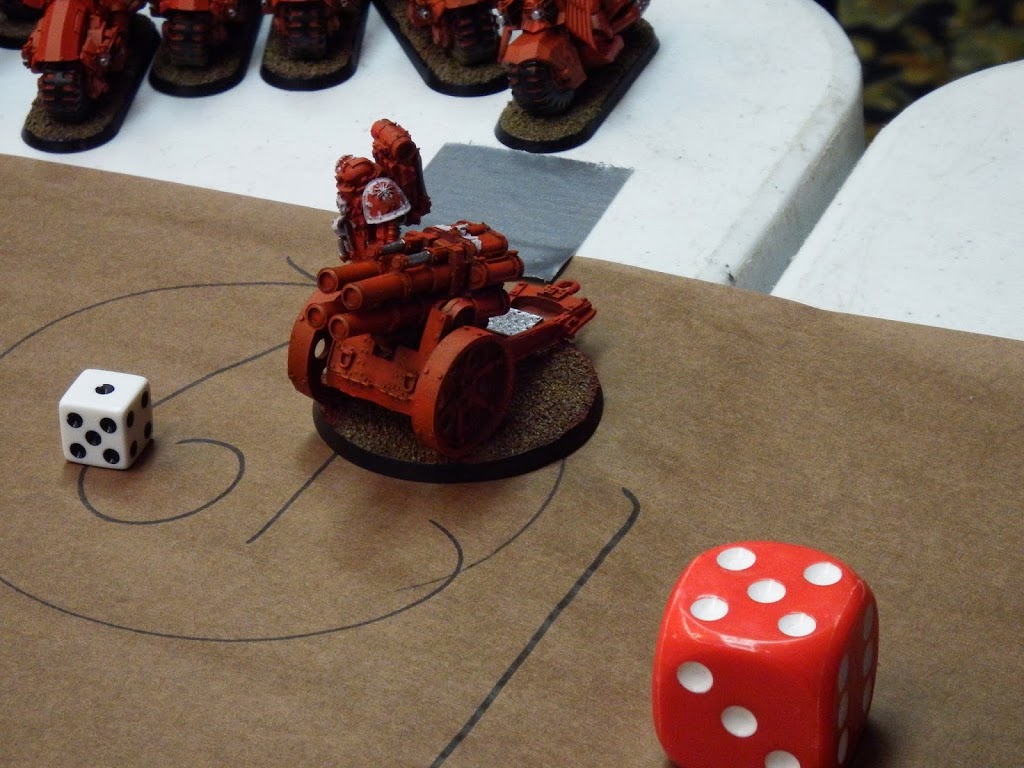
Through these letters, Neil made a humble request that if anyone wanted to show up Friday night to help set up, then the help would be welcome. I got to the hotel around 4pm, had a few hours to hang out with the wife, and then around 7ish I rolled down to the game hall. Well, me and about 40 other people! They turned out in droves to help the guys get set up. The only hiccup we hit Friday night was that the organizers were using massive rolls of paper to line the tables and help mark out the play areas Each roll was exactly 4 feet wide, which was a marvelous solution to mapping out that many tables that quickly. However, about 6 tables into the process the paper ran out and one of the organizers had to run out and get more paper. Whoops. These sorts of oversights have to be expected in an event of this size, especially for a growing GT like this one.
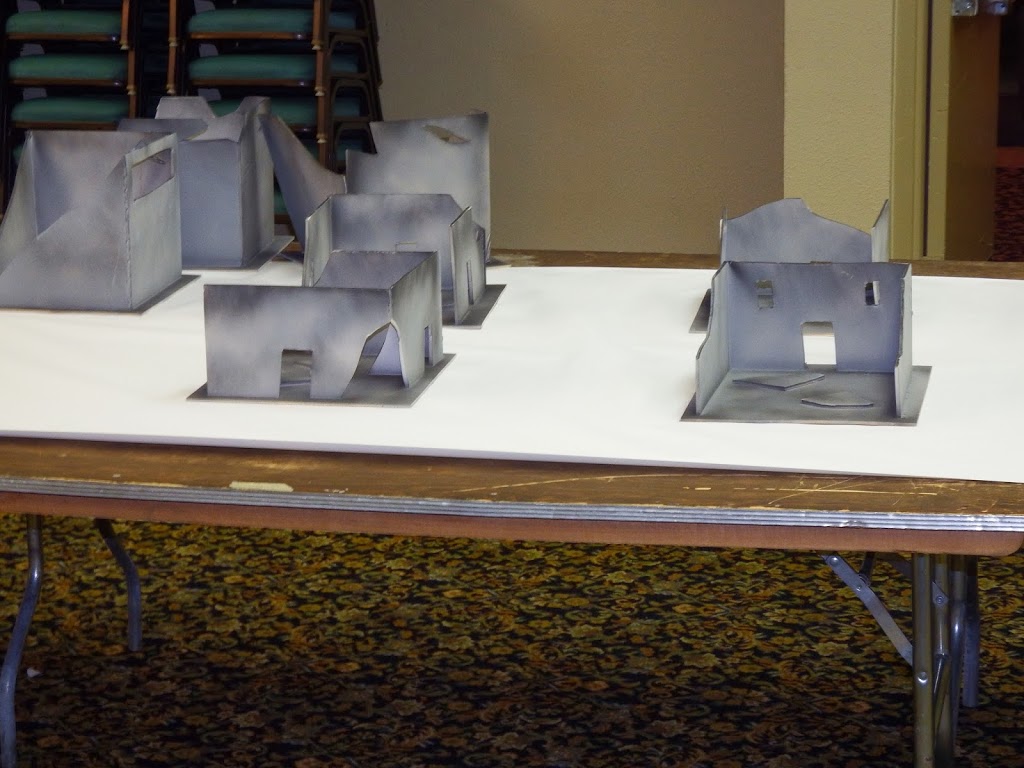
It was clear that at this point the guys had the art of terrain layout down to a science. Table were already set up at this point and dozens and dozens of trashbags were scattered around the room, each filled with a variety of scenery pieces. Hills, buildings, area terrain, etc. As the bags were emptied, you began to get a sense of history to the GT, as some scenery seemed made in sets (lava terrain, orky ruins, etc) while other sets seemed like assembly line buildings and hills with barely enough paint to cover their bright pink foam surfaces. Being that I have never attended another GT, I can only surmise when you are putting together over 400 pieces of terrain for more than 50 tables, you are limited in the amount of detail you can apply. So while I wasn’t terribly impressed with the terrain, it did the job just fine. Each table was seemingly identical in terms of the size of the terrain pieces, what each piece counted as, etc.
In addition, they had a terrain repair station running on the side, and like kids lining up for cafeteria food, we carried of battered pieces of terrain to the table to be glued and touched up with an airbrush. Generally repairs took less than a minute, so you didn’t have to stand around for long. Like I said, they had it down to a science.
The GT was for 2000 points, with 7 rounds played over the course of 2 days. Registration started at 7am (yikes) with dice rolling at 8am. A new system was being introduced to the GT this year called Torrent of Fire. Torrent of Fire was new to me, but the basic idea was to establish a way to rank tournament players in a way as uniformly as possible, and to be able to rank those players nationally as well, where scores could be tabulated pretty much at the click of a button. You can enter the results from each round on a smart device or computer and pairings for each round are posted on the ToF website. So you basically go the event, log in and enter your results from each round, then wait for the new round results to be posted for your next game. That’s a really dumbed down explanation of what ToF is, which is to say I’m a bit of an idiot when it comes to anything techy, but the potential for this application is immense. I asked the ToF guys to speak on WarCouncil where they could full explain what ToF is and how they are planning to spread the word about it. So once I hear from them, YOU’LL hear from them.
The 11th Company guys tried to get everyone to sign up for a ToF account before the event through their newletters, but sadly, not all of us (yes, that means me) did. So posting the results for the first round was painfully slow, as dozens of us had to create accounts for the event and then post our results. However, let me say that after this traffic jam, the software worked beautifully! Since 95% of the attendees had a smart phone or the like , they just posted their results each round on their phones. The rest of us used one of the dozen or so tablets or laptops the 11th Co guys furnished so we could quickly enter our results.
The only room for error I see here is that if me and my latest opponent enter different results, I’m not sure how they will establish which results are right. So while there is room for error, I think the overall feel was that ToF is amazing. On top of all that, ToF had several support personal on site, promoting ToF and helping to create accounts, answer ?’s, etc. Great job guys! I hope ToF spreads like wildfire!
Check out their site if you get time. The ToF site also has a list of events coming up around the country, so if you eager to get to a GT, there might be one closer than you think!
The event ran like you might think after that. Pairings were posted at the start of each round, players fanned out carting massive display boards to their next match up, trying to avoid tipping over or bumping into anybody. I can honestly say that every person I met or played all weekend was a delight, without a rotten apple in the bunch. There was just a good vibe in the room.
Judge support at the event was excellent! Judge walked the long lanes of the hall, answering questions, making rules calls, updating us on how long we had left to play, etc. I never felt like a judge was far away.
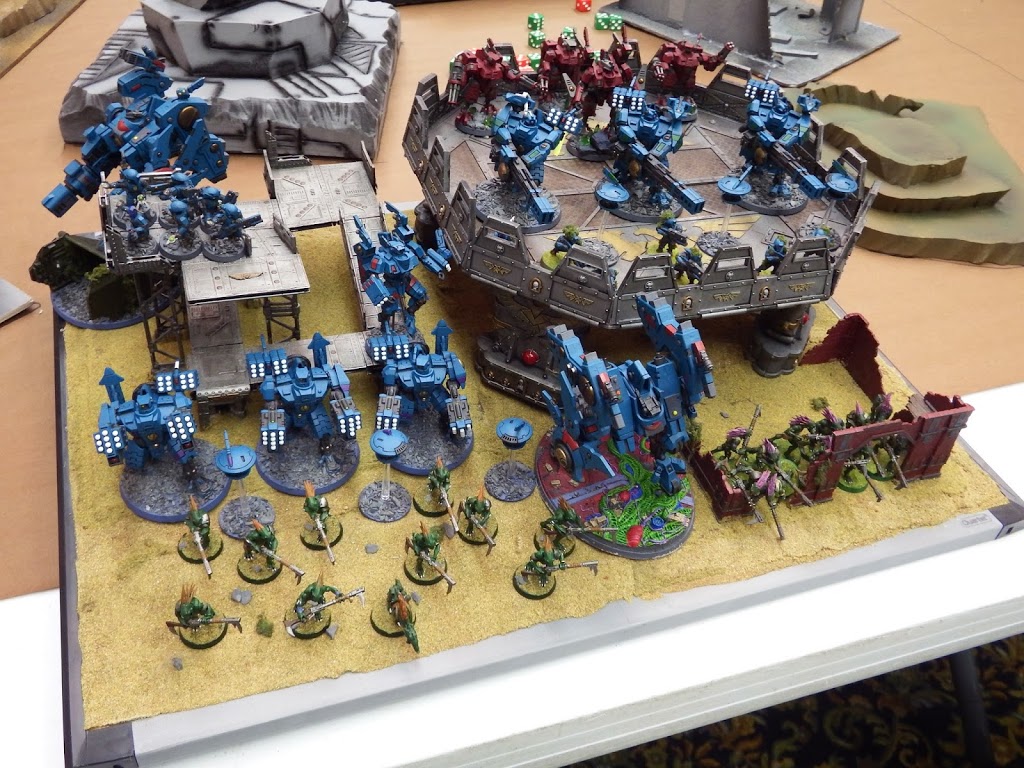
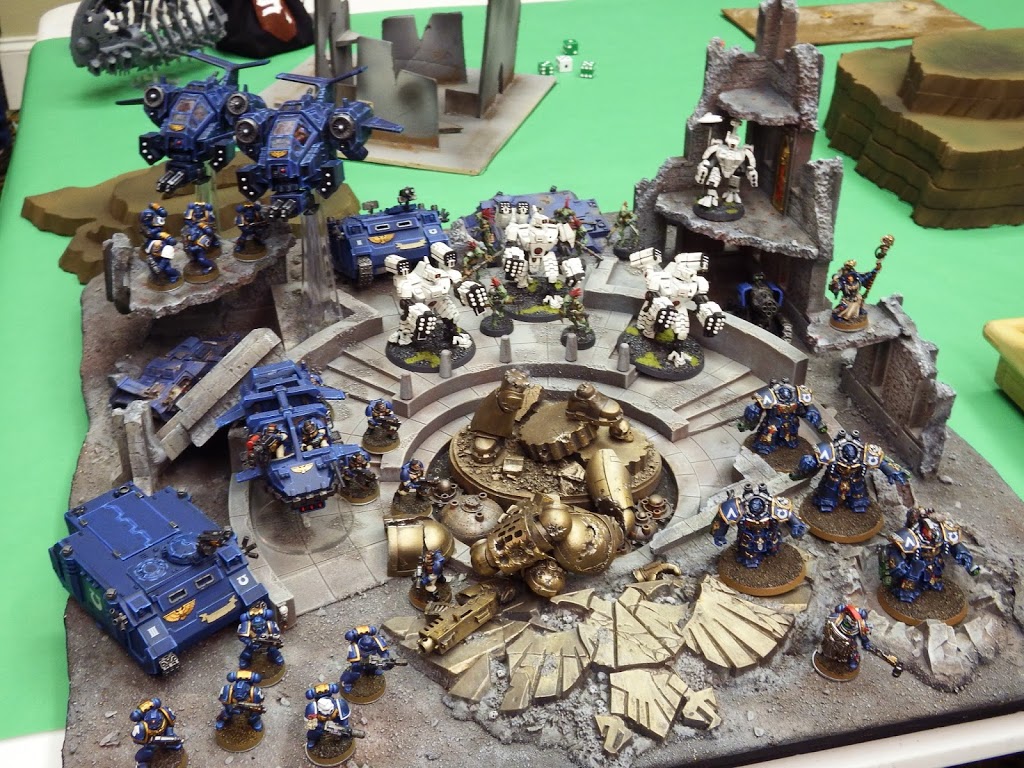
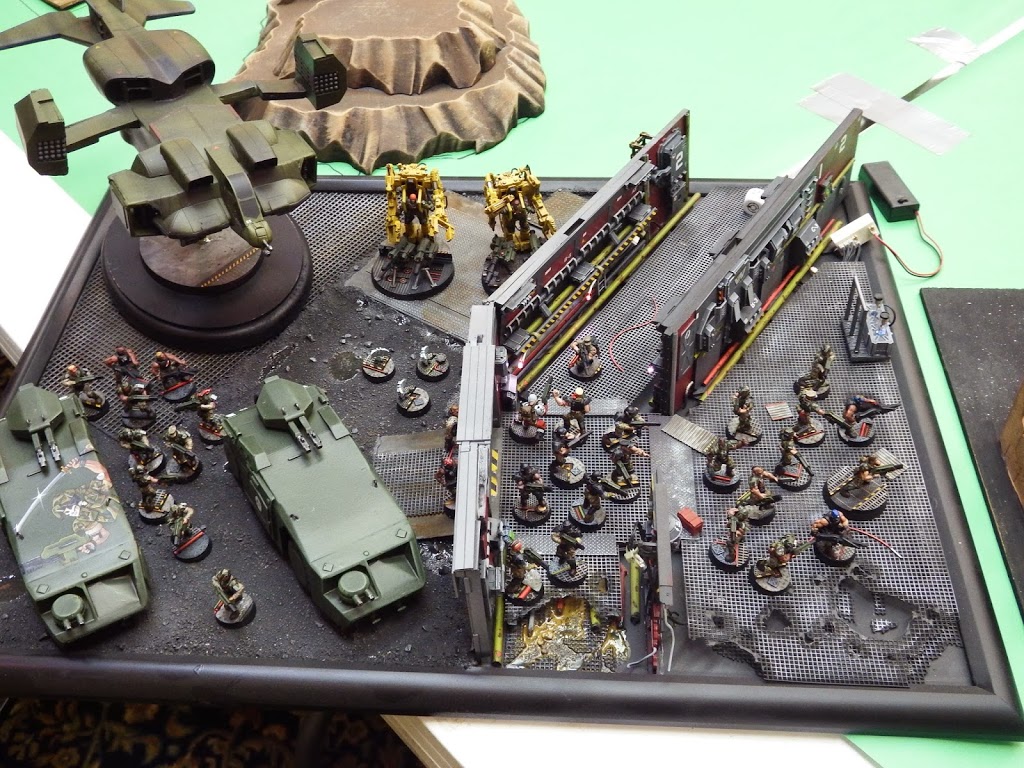
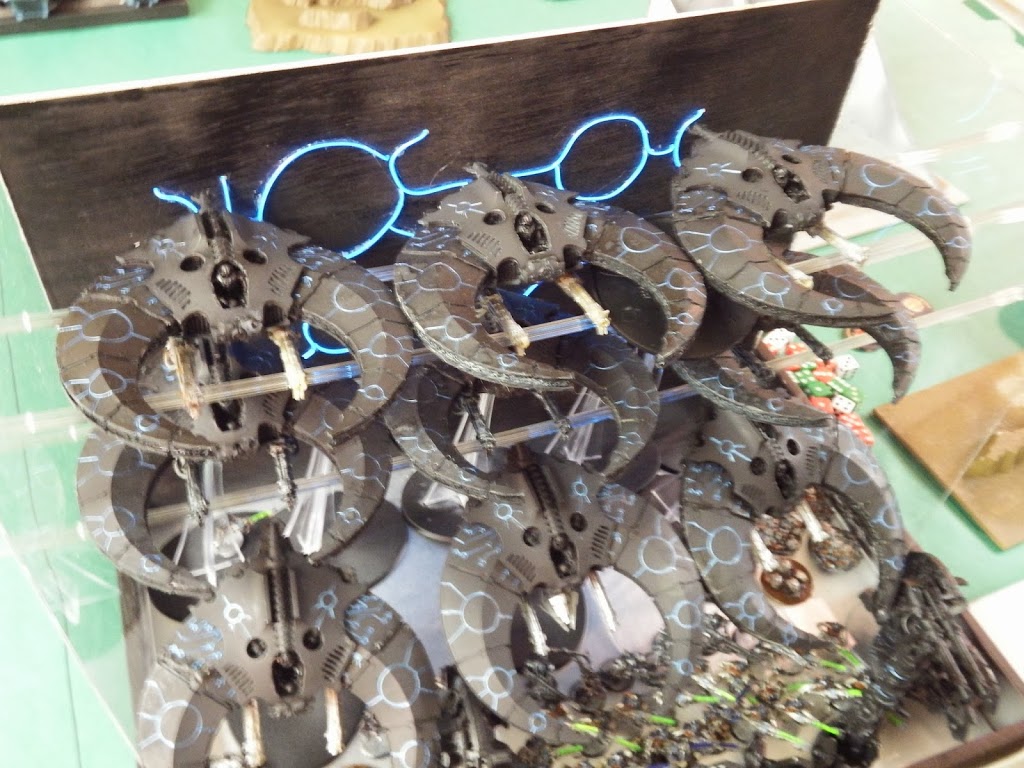
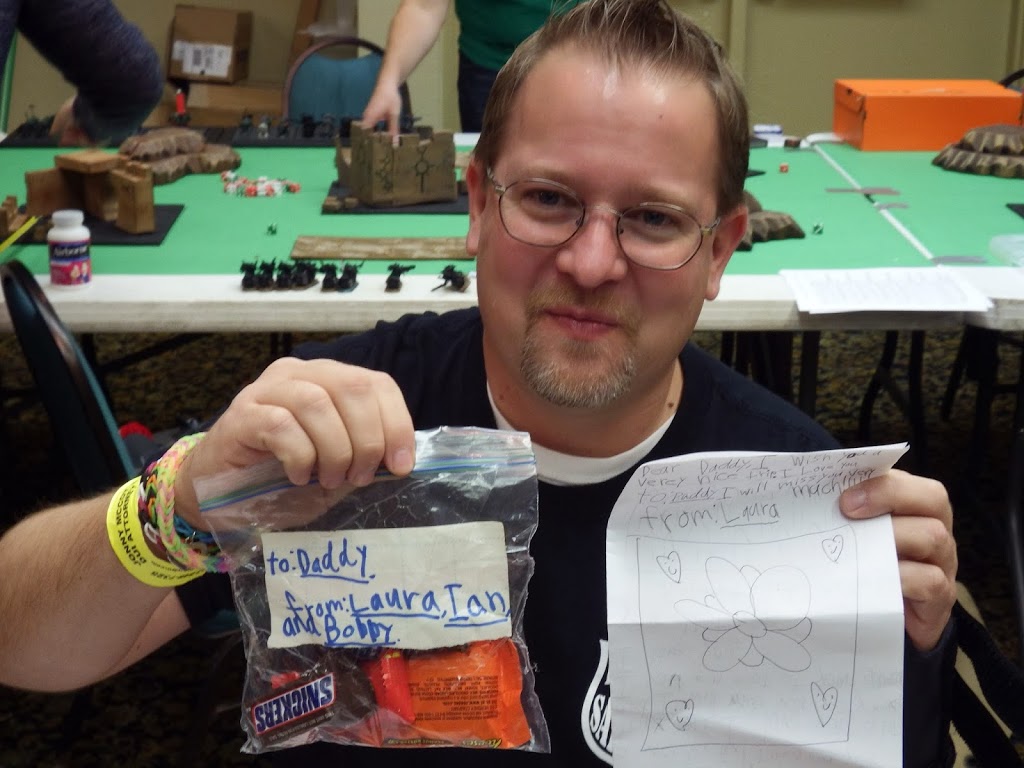
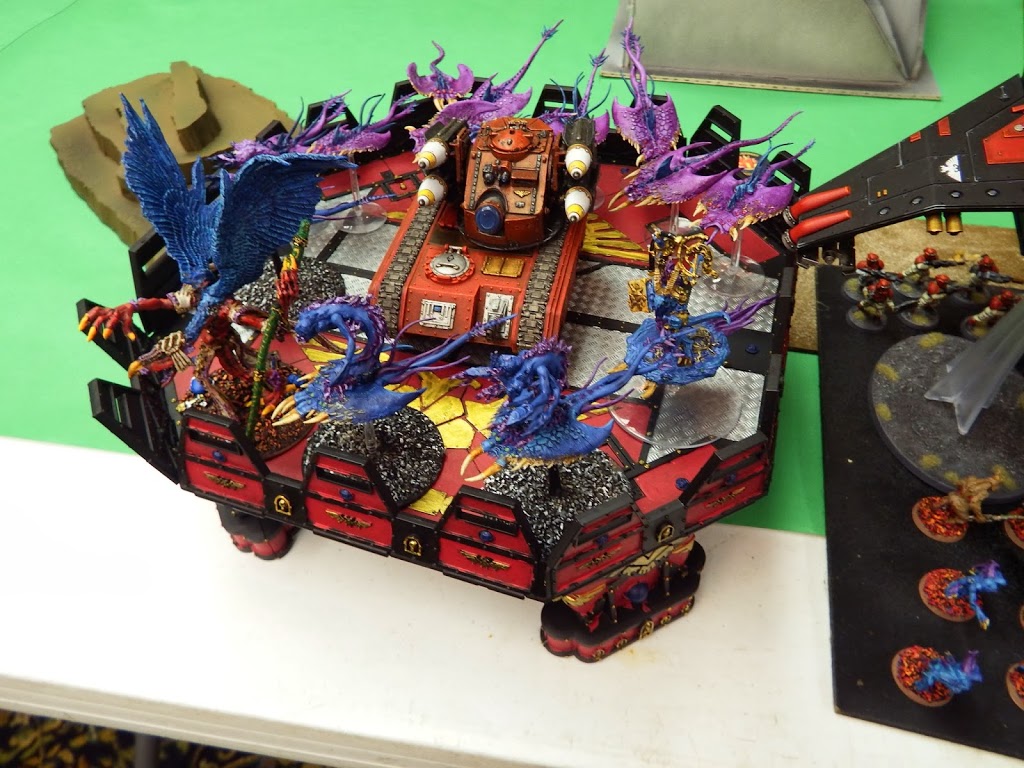
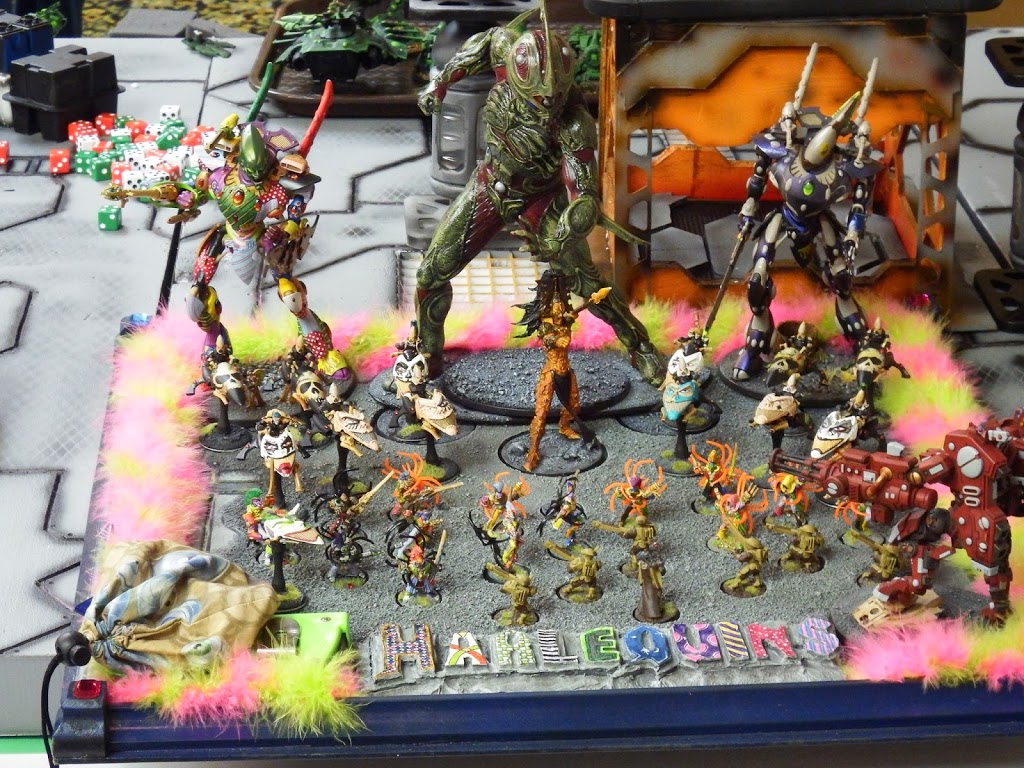
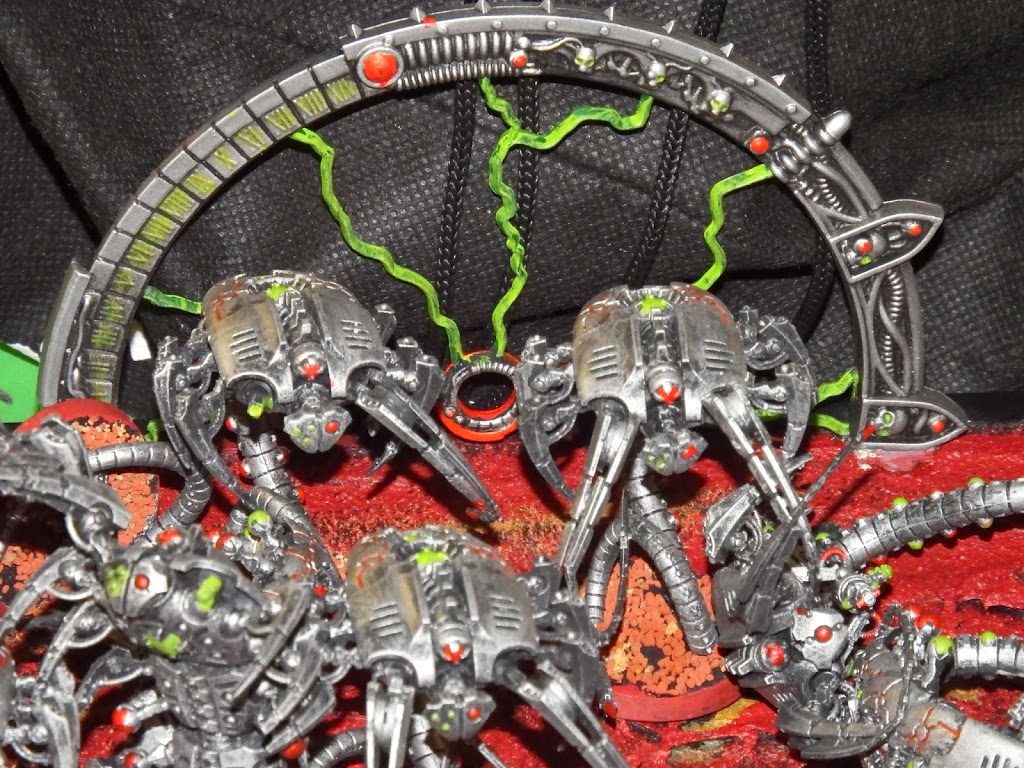
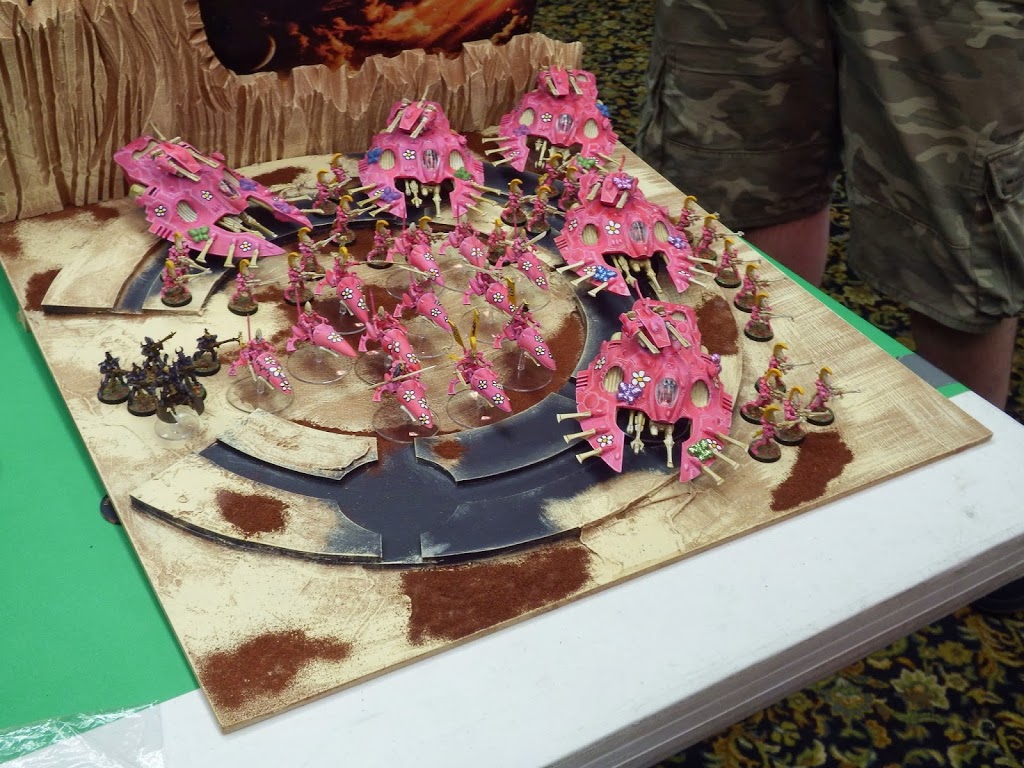
There were some amazing armies present at the event and while it would be impossible to show them all, these images represent a smattering of some of the armies I found most evocative. You can check out more on our Facebook Page!
Saturday was four back to back games. Playing four back to back games of 40k is just as exhausting as you might think it is. The only snaffu to the entire day was that since this was an uncatered event, with some players finishing later than others, there was a definite imbalance in the lunch break for many of the players. There was a bar next door to the hotel, but it didn’t seem the 11th Co. had informed the bar to expect a lunch rush around 2-3pm as the GT let out for lunch. So when 30-40 of us rolled in for a mid day snack, the bar staff was a bit overrun and orders took a bit longer to get out than they normally would have. I saw a salad take about 20 minutes to get to one player. If I had to make a suggestion, I would have either recommended 90 minutes for lunch to allow players longer to drive somewhere off site, or perhaps a catered event. Even a simple boxed lunch furnished by the hotel would have been a welcome option. I worked in a hotel for about 5 years, so I know this wouldn’t have been much of a stretch. A little more planning in this regard next time guys would have gone a long way with an already tired player base.
Sadly, four games was going to be it for me. The Sunday games ran from about 8am to about 7pm or so. That meant if you played all 7 games, you were likely going to stay an extra night in the hotel, and for me that wasn’t really an option. So while I bailed like a chump, I have it on good authority that day two at the event went very well. The players from day one that stayed over were organized into brackets and you played through your bracket in an attempt to match up players with those of similar standing. What this meant was if you wanted to play 7 games, you got to play 7 games, and those games would be against people of a similar W/L record.
So, final thoughts . . . .
Pros: 11th Co GT was an AWESOME time, and I had a blast! The event, while suffering a few expected growing pains, is handled with style and organized with professionalism. The staff are friendly, knowledgeable and well organized, and they are looking for ways to improve the experience for their players, both with some amazing prize support from vendors like Greenman Designs, MicroArts Studios, BitzBox, KR Multicase, Mr. Dandy and yours truly among a dozen others.
Torrent of Fire was a welcome addition to the event and definitely sped things up as the day went along.
Cons: A few organization snaffus were to be expected here and there, and since there is always room for improvement I don’t hold this against them. Catering or a longer lunch break would have been a welcome addition, but was likely overlooked to attempt to keep the cost of the GT as low as possible.
In a major oversight on my part and possibly at least partially responsible for why I lost four games back to back was that I had brought an 1850 point list to a 2000 point tournament! And while this was completely my fault, 100% my mistake, what was interesting that my list wasn’t looked at until the 3rd round of play, and that the judge didn’t catch the error or inform me. In fact, until the start of my fourth game, no one caught it. Finally my fourth round opponent brought it to my attention. I was more than a little surprised at my oversight.
And while I agree that vendor support at a GT isn’t always right for every event, if the event continues to grow they may want to consider allowing vendors into the hall in some form, fashion, or another.
Final Conclusion:
I give the Myrtle Beach 11th Co GT 9 out of 10! It was highly fun, exhausting, and a great chance to meet some cool guys (and gals! More lady players than I’ve ever seen at an event!)
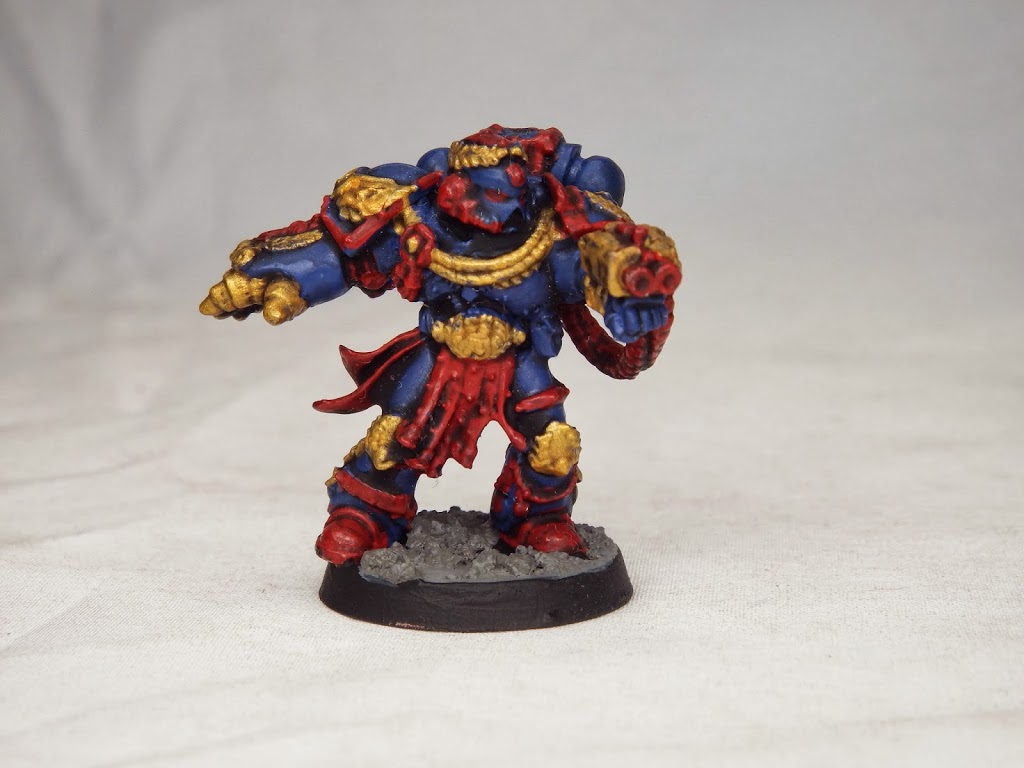
Greeting all you boys and ghouls! Caleb with White Metal Games here! Today I have a quick and easy tutorial for you: textured urban rubble basing for your miniature needs
.
Basing your miniatures is often the final step to really finish off your miniatures. The problem is that after you’ve take so much time to paint your miniature, you’re really tired and basing is generally the last thing you want to think about. Most folks default to the green/brown earth/flock scenario, which is perfectly fine. But not every battle should be fought on mother earth. Some battles are waged in the ruins of the 41st millenia.
So, how to kill two birds with one stone. The answer is texturing your paint! Textured paint is nothing new. GW sells it. Let me save you a little time and money. It’s sand. It’s just sand, grit, or ballast mixed into the paint.
So, how do we make our own textured paint? Well, this should come as no shock, we add it in ourselves.
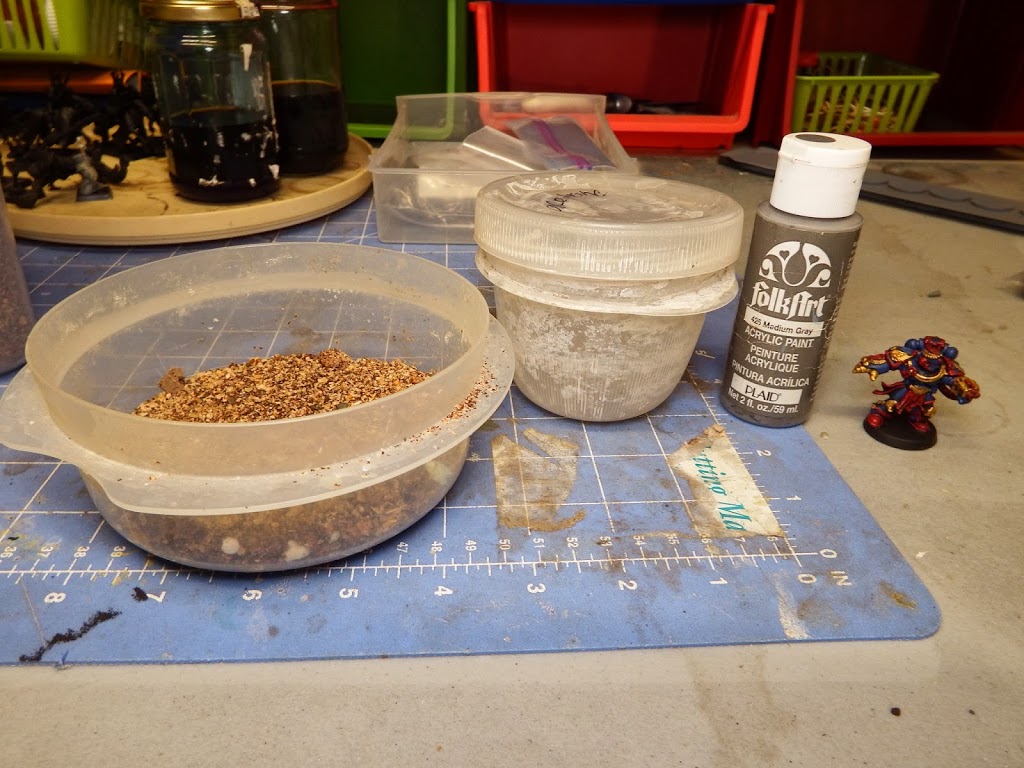
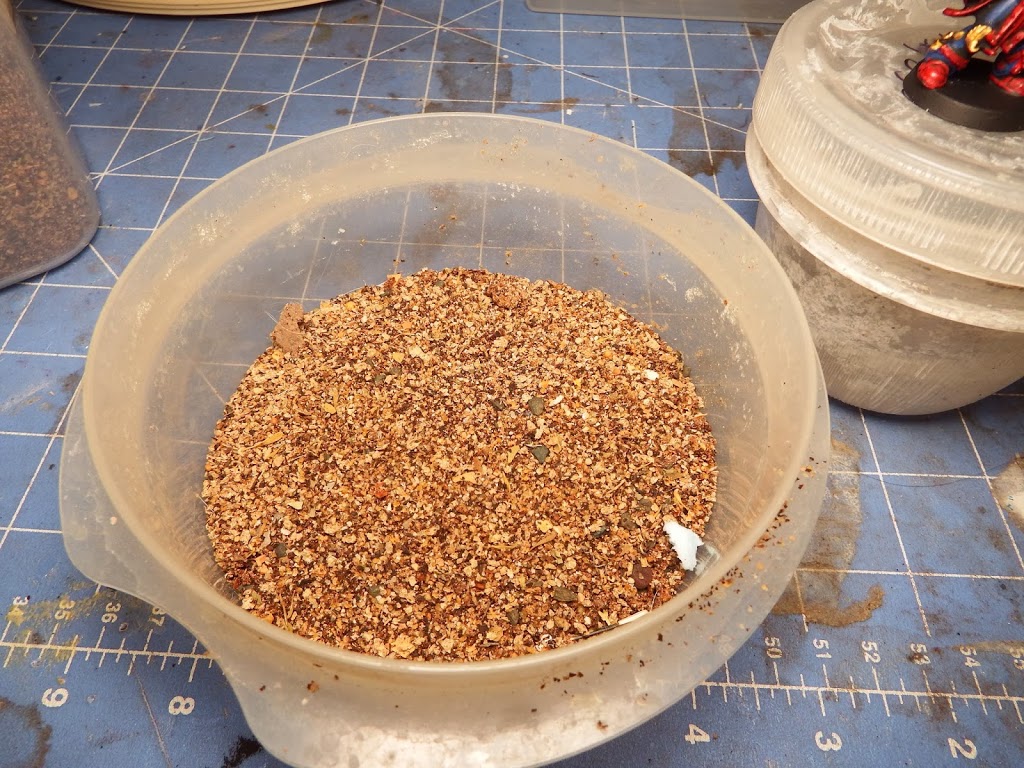
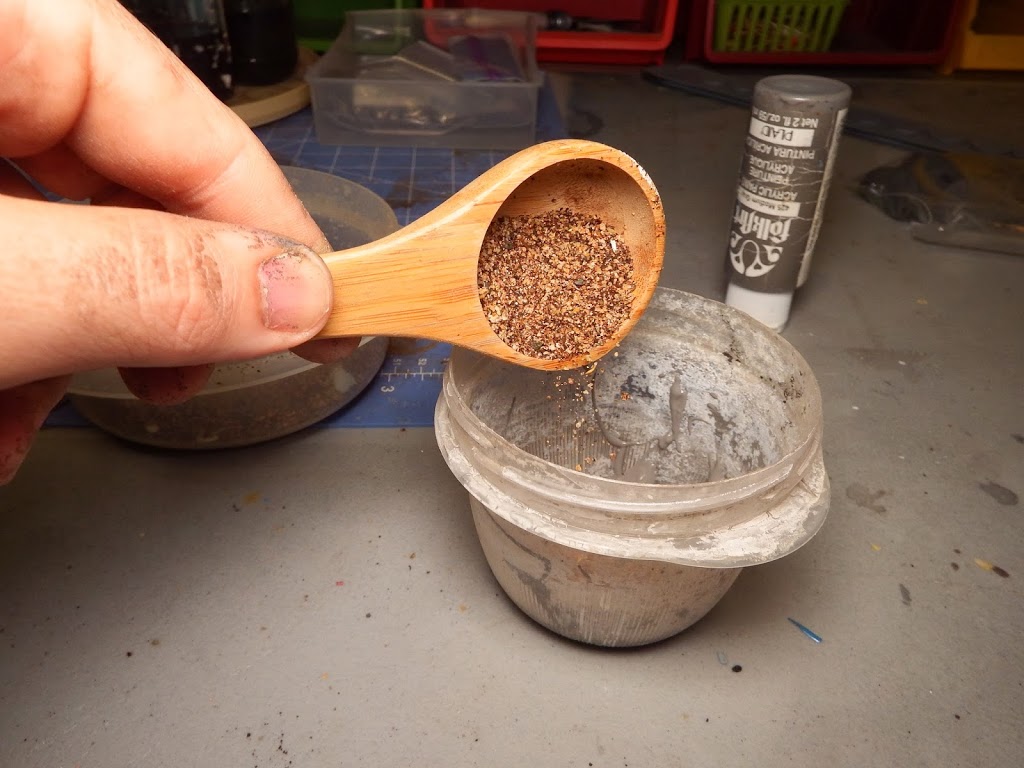
First, grab a mini, some textured basing material (mine is a blend of sand, dirt, herbs, dried tea leaves, whatever I have extra that I add to the batch over time) and some cheap paint, plus an empty container.
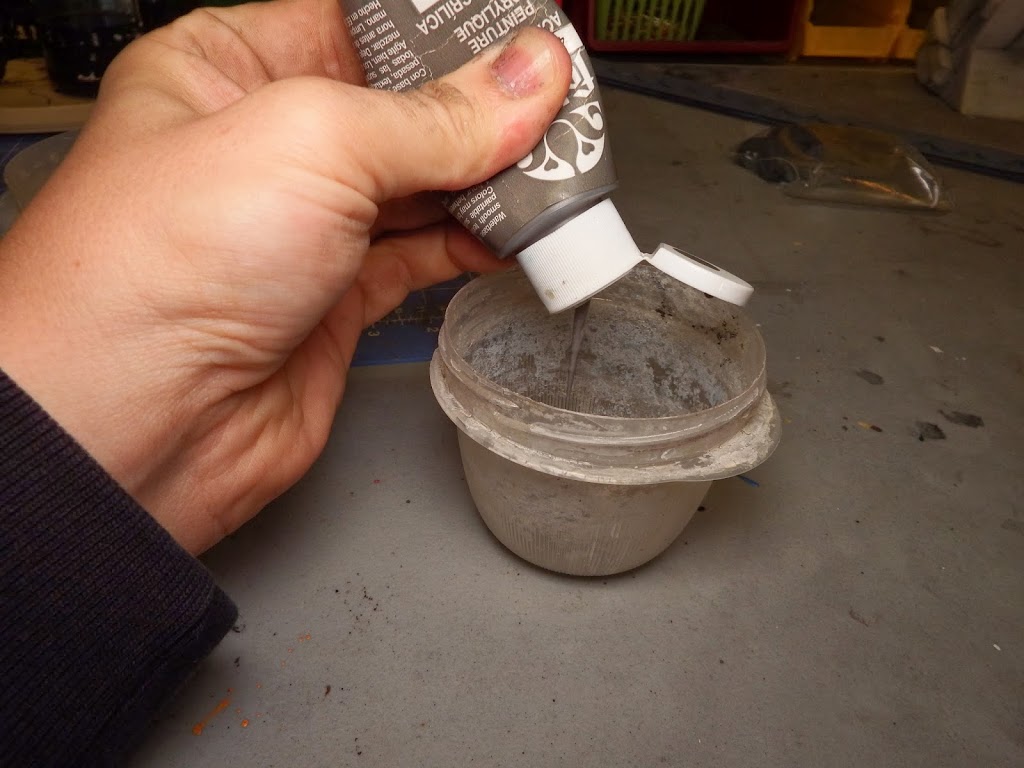
First, add some paint to the container. Darker is usually better, because then you can dry brush up to create texture. In this case I use a dark grey paint.
Add some textured basing material.
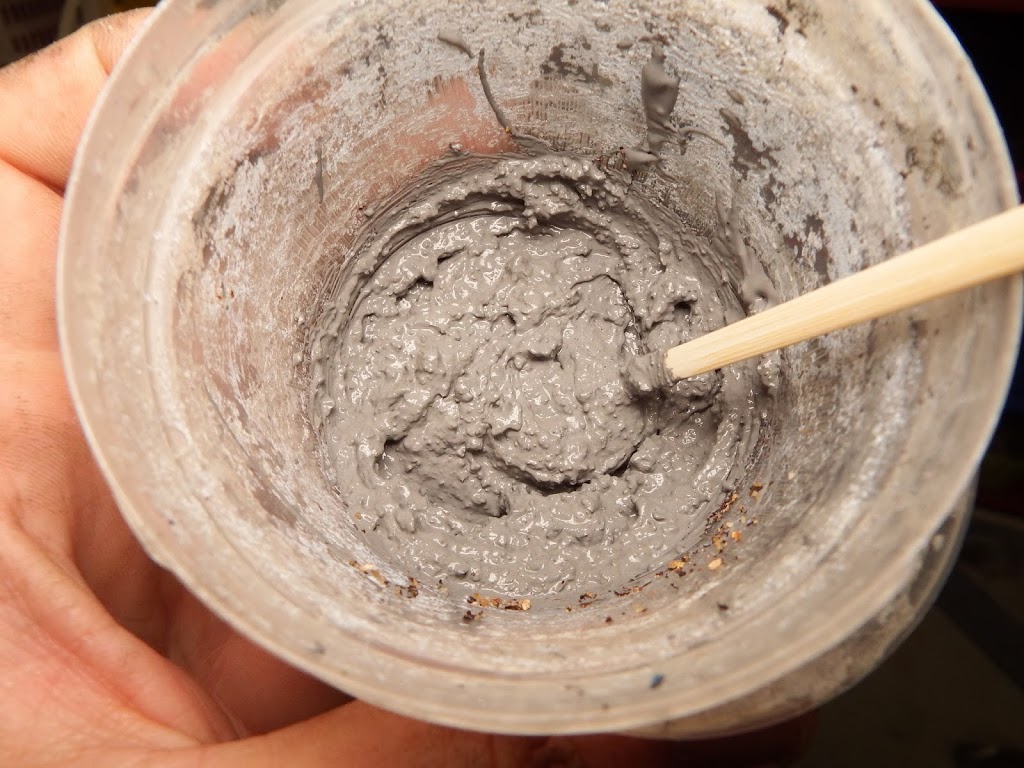
Stir to the consistency you like. Pancake batter is about what I go for, or ‘gritty’. Yoggurt like consistency.
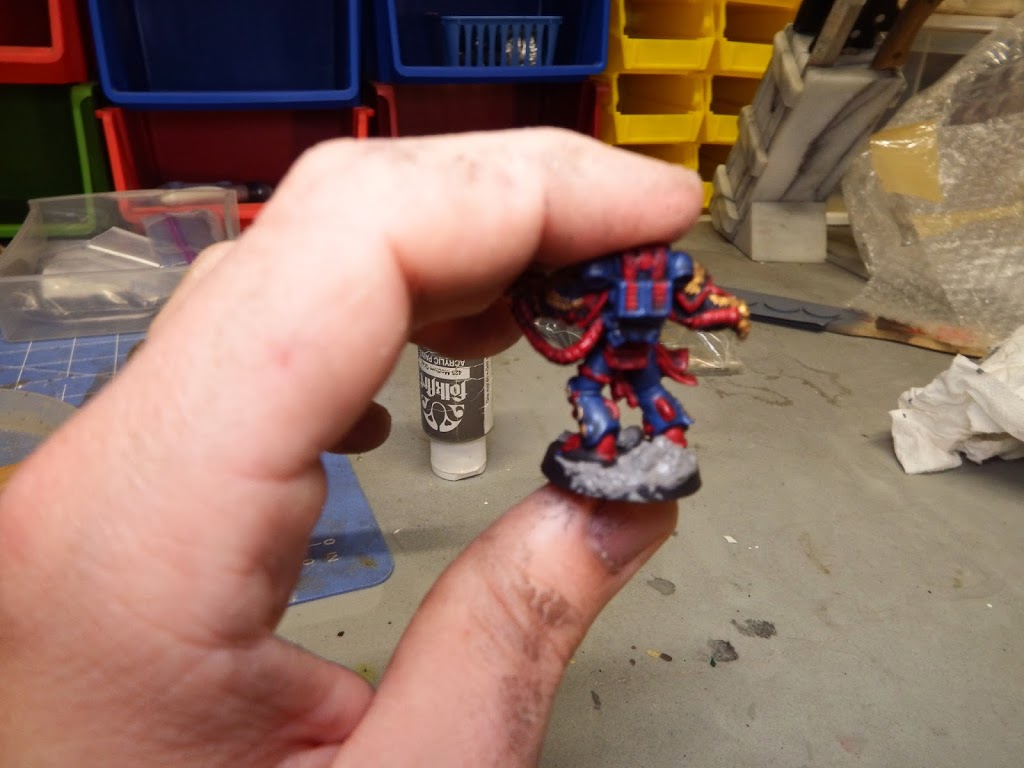
Use an old brush or wooden craft stick to apply some of the basing material to the mini. Be mindful of the paint areas, but a little drift is okay since this will look like dirt/grime/dust later.
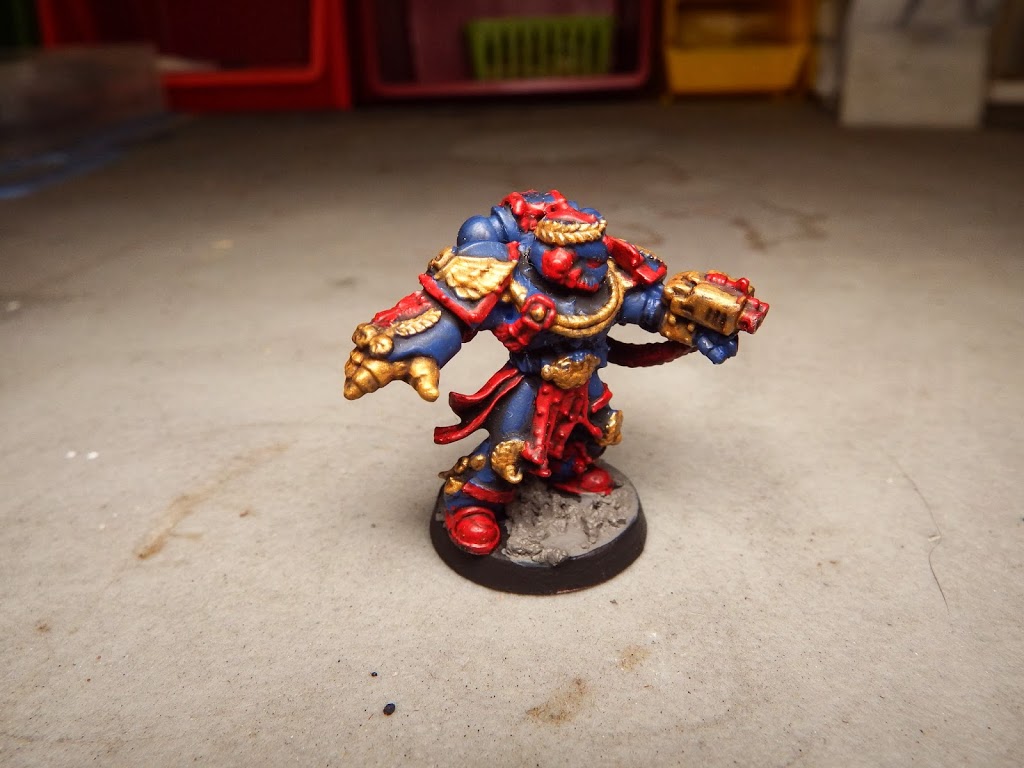
Do a little clean up with your finger and then apply a little paint to the edge to polish it off. I used black below.
This mixture will take longer than usual to dry, a few hours at least, but once dry you can wash it to detail or dry brush to help the texture stand out more. You can also add some bits like spare weapons, skulls, etc into the basing material, which will be slightly pliant and will hold down those spare bits like glue. I usually paint mine first and then just stick them wherever I feel like.
If you found this tutorial useful, be sure to check out more of our work on our homepage, or at the very least, like us on facebook!
In this episode we speak with The Jen and Joe from Screaming Heretic about cosplay! The Jen is an avid cosplayer and she speaks candidly about her cosplay experiences, everything from how she comes up with her amazing costumes, to some of the antics they get into at conventions, as well as how to politely tell someone to take their hand off your costumed ass.
If you want to know more about Screaming Heretic be sure to visit their website:
You can stream this episode from the White Metal Games Website, here.
Alternately you can also listen to the episode on Itunes.
War Council is a new podcast about 40k and things wargaming related. Justin was a one time client of Caleb’s that stuck around long enough for Caleb to ask him to do a podcast with him. Episodes revolve more around the hobby and fluff aspect of wargaming, and part of each episode follows the progress of White Metal Games as it tries to make a place for itself in a sea of miniature painting services.
3D Printing comes to the tabletop! Hey guys! Caleb with White Metal Games here. We’ve all heard rumors about the revolution that 3D printing will bring to the table. But will the rumors match our expectations? I sat down with Allen Clark and Tristan Morris, co-owners of Proxy Army, a games design company that plans to release their entire product line through 3D printing in hopes of bringing their unique miniatures to the wargaming community. What follows is a summarized account of our interview. However, you can see the full interview in 3 Parts on our youtube channel and presented as a podcast by steaming the interview on War Council. You can also listen to the interview via Itunes here.
White Metal Games: So what is Proxy Army? Tristan Morris: We are a custom miniatures company. Say you want a custom mini of your roleplaying game character. You can use our database to custom build a miniature, picking a torso, limbs, heads, drag and drop equipment, and create a fully customized miniature with a unique expression, pose. You can do the same thing with any other tabletop wargame or board game miniature. Allen Clark: The models are ‘rigged’ so you can drop and drag various points, to repose them, give them a smile, a frown, make their eyebrows furrow, Cheshire expressions, you can even ‘break’ their limbs if you want to . .
WMG: So primarily you make custom miniatures and by extension you could make compatible bits for various games. TM: We also have our own game called Proxy War. The game is supported by the 3D printed system, allowing you to play with any miniature you can imagine. WMG: Sounds like seemingly limitless options. So why did you both decide to get into 3D printing in the first place? TM: Well, I used to be in Engineering school. When I was about to graduate, I started playing around with the schools 3D printer to make some custom miniatures for friends of mine, tabletop gaming miniatures. It became clear pretty quickly that there was a high demand for custom miniatures. When the demand became too high, I started charging for my services. That was about 6 months ago. And here we are. WMG: So how did you guys meet? AC: Online through a game called Exalted. I ran a game where he played the villain for a few years and he approach me with the idea of a miniature games company. I suggested a few core mechanics and things grew from there. WMG: So you both moved to Durham to work together. And the rest of your team is pretty spread out. AC: All over the world. But Durham invited us to a program called Groundworks, which is a business incubator. So Groundworks put us up and provided lots of great advice to help us get off the ground. Mostly there are tech companies. In fact we are the only company that is creating a physical product. WMG: Tell us a little bit about the world of Proxy War. TM: So Proxy War is a 28mm science fantasy game. The game allows players to bring literally any army they want to the table, and provides them with balanced rules for creating their own custom miniatures. So one player could have a steampunk style pirate army and another could have a lupine/feline based ninja army, etc. The galaxy is BIG. You can rule 99% of the galaxy and there are still a million stars you have never visited. So while you have vast empires that rule portions of the galaxy, there are always dark corners to explore and rocks to look under that will reveal new empires, lesser powers, strange technology and the like. WMG: But if I can have anything, then will you still be able to buy miniatures in game stores? Will there be cannon factions? AC: Yes, but let me emphasis we are a custom miniatures company. We will have a limited selection of models available in games stores, with the option to expand that line depending on sales. WMG: Sure that makes sense. Less risk to the game store owners as well, who don’t have to risk overstocking their shelves with models they can’t move. So, what models CAN I expect to see in store? TM: For the setting to speak to people, we needed central races to encapsulate the setting. So we embodied that through three core races. The Vana, the Nakara, and the Human Solar Federation. So those races will be represented in our starter boxes. The Vana are a race of ‘plant people’, trying to eradicate other races so that the universe will be safe for them to grow indefinitely. They are violently protective of their space. Because they are ‘technical pacifists’ they use drones to do their dirty work.
The Nakara were, up until recently a servitor race, previously enslaved to the Vana but whom have since revolted against their prior masters. They are now trying to find their own place in the galaxy. The ‘nakara’ is essential a psychic field that other races are brought into an thus assimilated. A sort of Hive Mind mentality. So various races are all a part of this group, like a psychic empire scourging the stars for new empires to bring into the fold. Humans are the weakest of the starting factions, outclassed and well aware of that fact. They are a bit of opportunists, but largely ignored by the other factions, and thus left largely left alone to explore the stars until they cross paths again. So right now you’re probably wondering how much does these custom figures cost? Actually, it’s cheaper than you might think. A basic miniature will run about the same price as a traditional resin or pewter miniature. And when you consider this miniature comes fully assembled and posed to your liking, it’s a pure win in my book! No more cleaning flash, no more glue, no more clipping! Amazing! Where price does differ from a traditional company that makes and manufacturers their own miniatures is when you start to modify your figures. TM: All of our minis are custom, and we have small charges to get original models. Mods start at $20 and fully custom units that aren’t in the database at all go up to $430. However, to help circumvent this high cost, if you (the client) commission a model, those parts that make up the model are now loaded into our database. Each time one of these models sells or is used to print a model, you (the client) gets a percentage of that sell. (Like how a musician gets money every time their song is downloaded on itunes.) So in this way new content is constantly being added to the database and there are incentives for new designs to be commissioned. We are not the guardians of good taste and don’t have perfect psychic knowledge of what the gaming community wants. So if you design a unit and 10,000 of that unit are sold, you just got us 10,000 sales, so we can’t really see that as a bad thing. AC: We may also contact them to see if they are interested in joining the design staff, if their designs are that popular. TM: Each faction has 24 slots for units, including up to 6 slots for unique units, such as Mercenary bands. This allows you to gradually incorporate custom units for your army. There are also a bunch of pre-existing mercenary bands you can choose to field right from the start. By incorporating some of these factions, you can change the entire theme of your army,”
WMG: But what if I DO want to design my own custom unit. How does that work? AC:“You log unto our database of model parts and select from hundreds of thousands of pieces and snap them together, letting you make any model you can imagine. If you can’t find exactly what you are looking for, then you submit a 1-2 paragraph description to our design staff. They send a follow up questionare to outline the unit in greater detail and clarify. You partner with several members of the design staff and they send you outlines and sketches of concept work in progress, which you then respond to and help them fully develop the idea. Once you are satisfied with the concept, the design is sent to the 3D modeler and then printed.” WMG: Sounds time consuming. AC: Not really. It takes two weeks maximum for our full-time artist team to do up to thirty-two revisions in the concept art and illustration phase. WMG: How do you envision the culture of the game growing around this ultimate sandbox? AC: Although players can craft ANYTHING they like, these are not the core factions of the game, in context. TM: We envision a dynamic relationship between the player and the designers, where the lore changes based on which units are being used most by players. So if a splinter faction gains enough popularity, fits the lore and is taken seriously by the fanbase, it can be added to the core game and become an entirely new faction. WMG: Can you tell us a little bit about playtesting the game?
AC: The game was broken down time and time again to test the balance at every level of play. We liked the early versions of the game, but the game wasn’t playing the way we hoped. It wasn’t scaling properly. So we revised and learned from our playtesting experiences. We analyzed everything from how long it takes to play a turn or consider their actions before moving their figures, how many times a player referenced a book during a turn, realizing that players preferred higher numbers meaning better results (vs. rolling under a target number, which is viewed as negative by many players), to how players prefer throwing tons of dice versus just throwing a few dice. They like the feel of forty dice in their hands when forty gunmen open fire. WMG: How does it play? TM: Much likeHERO or GURPS. It’s a point based system, which allows you to build rules for models where no rules exist. That way you can print the model you like first, and design the rules afterwards. The abilities scale based on the size of the game, so you can run a 500 man horde army and treat large groups of figures as a single ‘unit’ or a 5 man elite shock unit and they balance accordingly. Or a single ‘superman’ AC: We call him Zargoth the Destroyer. In playtesting we would just load him up with abilities and use him to play test hypothetical builds in the system, just to make sure he wouldn’t break the game. WMG: Where have you demoed the game so far? AC: Local shops and at an Expo. We even had folks that aren’t traditional gamers coming by to playtest the game and they picked it up really easily. WMG: So Proxy War is a game a mom could play with her kid? TM: Exactly. WMG: So when can we expect to start seeing product for Proxy War hit FLGS? TM: We have a kickstarter in November, and then you can expect to see actual product in stores about seven months after that. WMG: So around summer 2014. Tell us more about the kickstarter? What will some of the reward levels be? TM: The rules of course, both in PDF and hardback. And custom minis is the big thing. For a fully custom unit that will be about $430 bucks, and you get a percentage of the sales. There will be levels of small skirmish bands, larger platoons, tanks, and ‘titans up to eighteen inches tall! AC: We also have terrain and as a stretch goal there is destructible terrain that can literally be pulled apart as the building is destroyed. This allows you to change the circumstances of the battlefield itself rather than just being subject to the field as it is presented. TM: We also have levels for full armies complete with a custom army book. There is even a tier where you can have your faction added to the core game. WMG: Sort of like buying real estate in the game.
AC: Just like real estate, since you start earning a percentage of those sales. In addition, if you are a game designer, you get a discount for have Proxy War design and print your models for your game. And that’s for both test models and full production runs. TM: We are also going to offer a digital art book with over 3000 sketches of the game from development to really show you how the game evolved. WMG: So how to are you going to make sure your kickstarter stands out from every other game out there? TM: Enthusiasm! To get other people excited about your game,,you have to show your level of excitement and get the players excited. Players are the driving force behind our content. We want them to feel engaged at the time of launch. In fact at the launch party we’re giving away $3000 worth of a fully custom miniatures to one lucky attendee that has the best idea for a custom army (per voting). AC: As well as two laptops. WMG: . . . what . . .? AC: We’re giving away two laptops! Chrome netbooks! And they’ll be able too surf the netbooks to watch the kickstarter video, that sort of thing. WMG: Will I be able to try out the database at the party? AC: We’ll have some demos for the group, but it won’t be on the netbooks. TM: We’ll also have a VIP area at the party, with guest speakers Rob Balder, the creator of Erfworld and Howard Taylor, the creator of Schlock Mercenary will be there. And we’ll are going to be making exclusive miniatures available as a reward level on the kickstarter from both web comics. Never offered before and never offered again. WMG: Any final thoughts? TM: This is the first barrage in a new revolution of gaming. The world of 3D printing is going to turn the miniature gaming industry on it’s head. Desktop printers will be affordable in a few years and when that happens we plan to allow people that own their own 3D printers to print their own models on their own printer just by paying us a tiny access fee to our database. The future of miniature gaming is not boxed kits, but printing off their miniatures at home, anything they can imagine and then game with it. Change is coming. More information regarding Proxy Army and Proxy War can be found on their facebook page and their homepage. And remember remember the 5th of November . . . that’s the launch date for their Kickstarter! They’ll be hosting a launch party at Atomic Empire in Durham, NC! They’re expecting quite a crowd so come early! You could win a full army designed in any way you like!
With every new project you take on, you have to ask yourself what is your end game. If the project is going to be a competition piece, then by all means, take months to complete it, 50 shades of grey shading and all. But sometimes the goal is just to get a model or piece of terrain on the table and quickly.
There are some amazing models, dioramas, and display boards out there. We see them at cons, we see them at GT’s, and online. And they raise the bar really high.
THIS TUTORIAL WILL LOOK UP AT THE BAR, LAUGH, AND WALK WAAAAAY BENEATH IT.
This tutorial is for the guy with two kids and five minutes to build a hill who has spent his last dime on baby food and diapers this month. I salute you, sir, for trying to stick to the hobby at all.
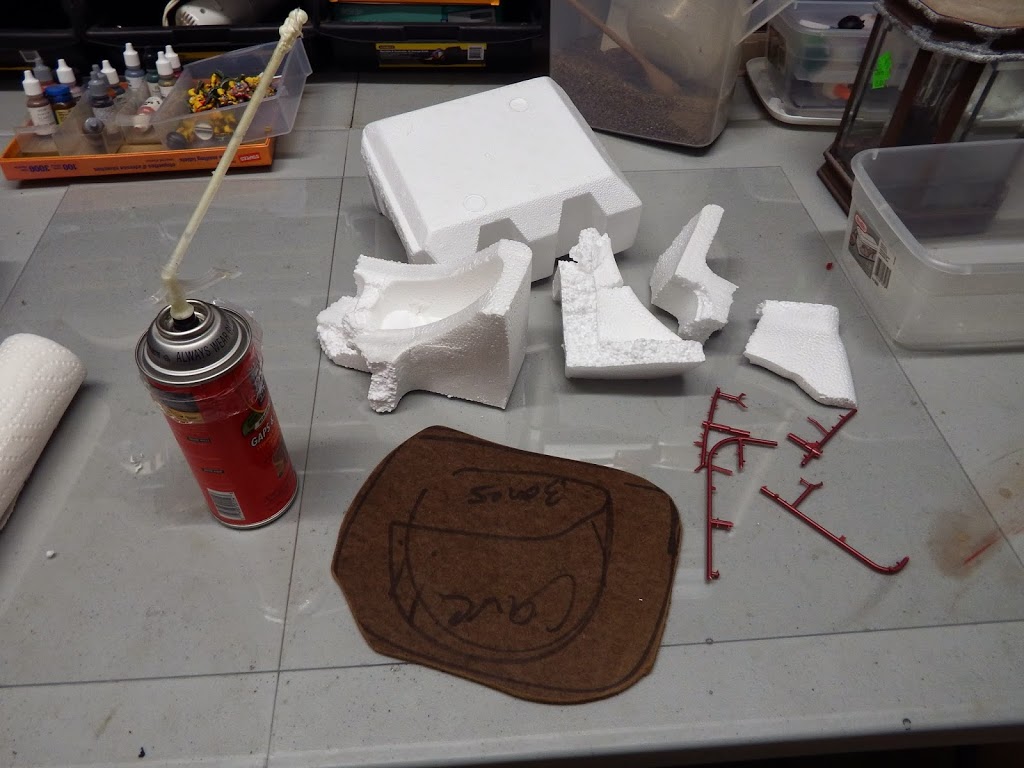
For everyone else out there with money to burn, by all means, take the time to build a nice hill. But if you have no time to spend and even less money, this is the tutorial for you! Here’s what you’ll need for this urban hill:
Some hard packaging foam (not the cheap kind you get in the mail, the hard stuff you get with electronics.)
A base of some sort (I used MDF here, but cardboard would work fine. After all, why waste good money on terrain when you could blow it on miniatures)
Some expanding foam (You get a can of this at DIY stores or Walmart or the like for about $4 bucks a can)
Some spare sprue from you the latest kit
Sand, dried spices, ballast, or whatever other basing material you have around. Dirt from your back yard will be fine.
Okay. I call this the five minute hill. If it takes you longer than five minutes to do this then that equation up above was a complete waste of my terrain (whereby terrain = time).
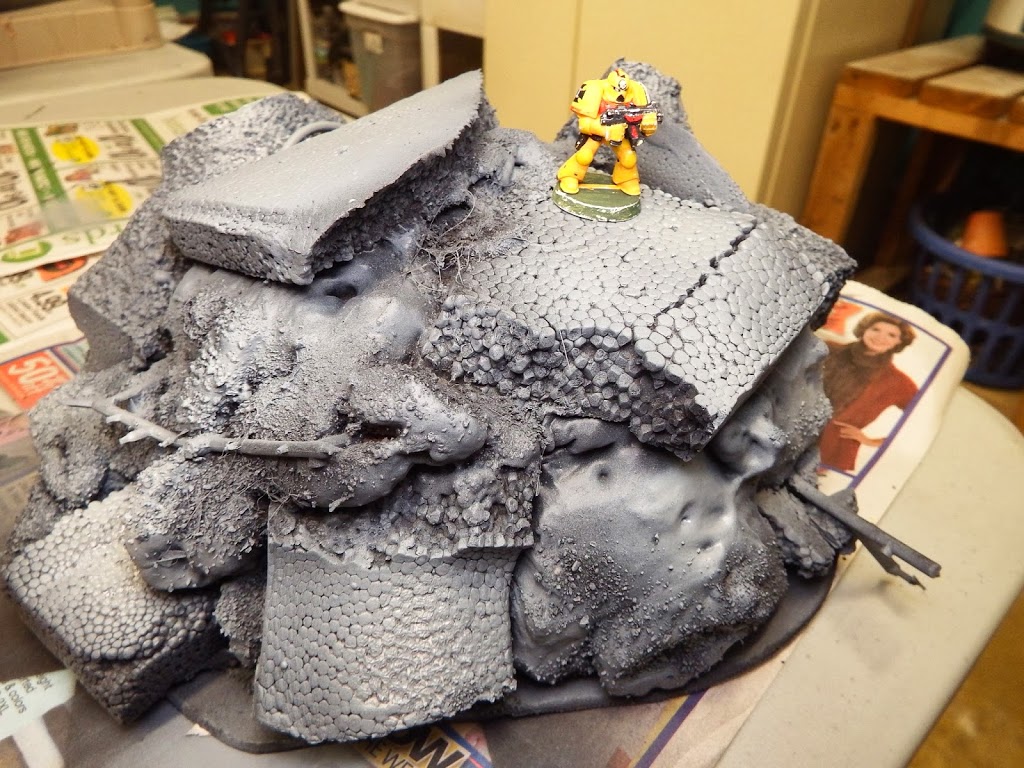
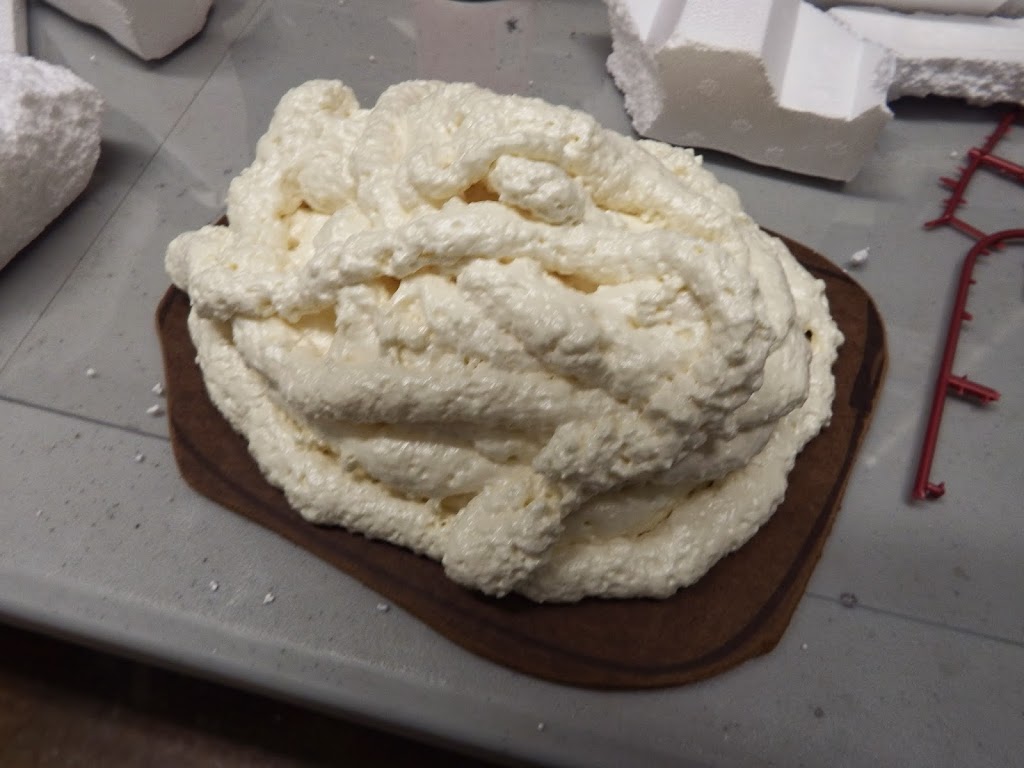
First, apply a generous amount of foam to the base. Be sure to go around the edges. It looks a bit like a curled up intestine. Gross.
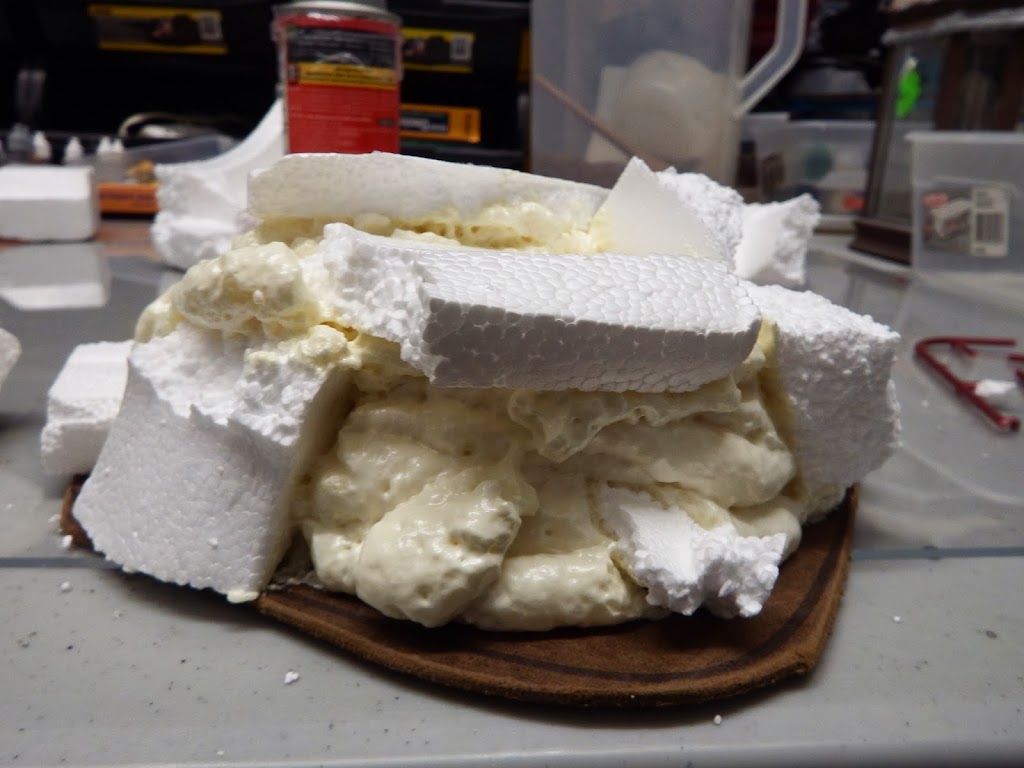
Now break up bits of the foam. If you have any large, flat pieces, stick those on top. They will form a place for miniatures to stand on.
Use the rest of the foam and just thrust it into the foam pile. Shove them in there anyway you like. Like how you got your sofa in your living room.
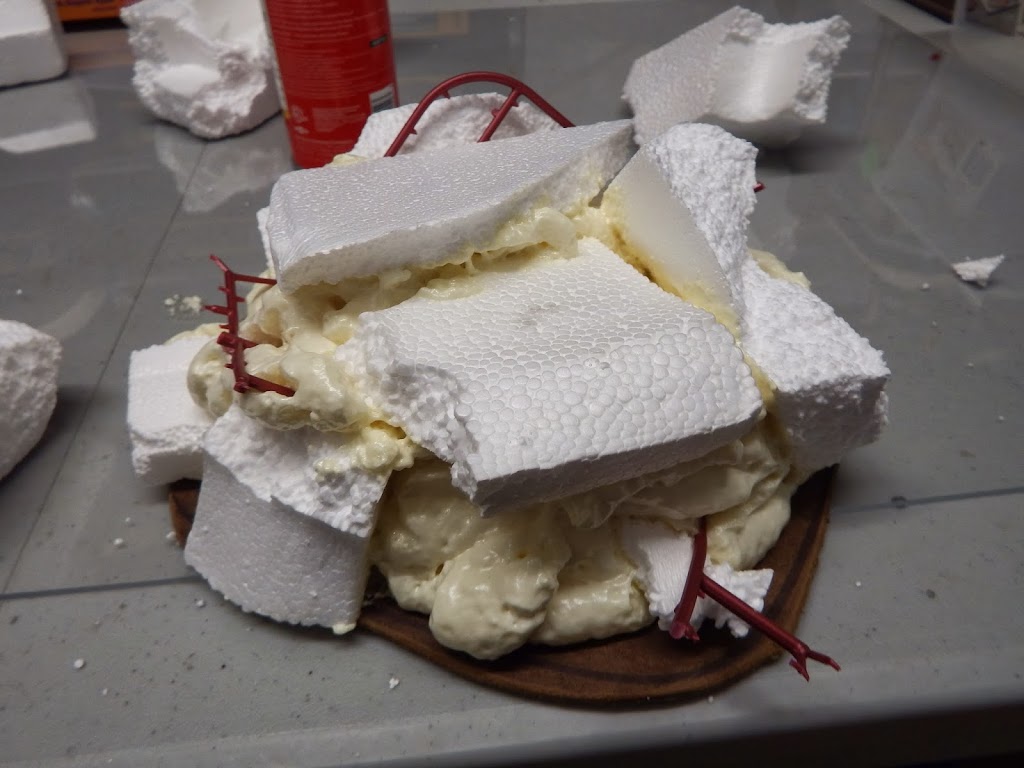
Take a few bits of the sprue and do the same.
If you have anything else to throw in there, like bolters, skulls, or other bric-a-brac (that’s fancy talk for junk), now is the time to add it too.
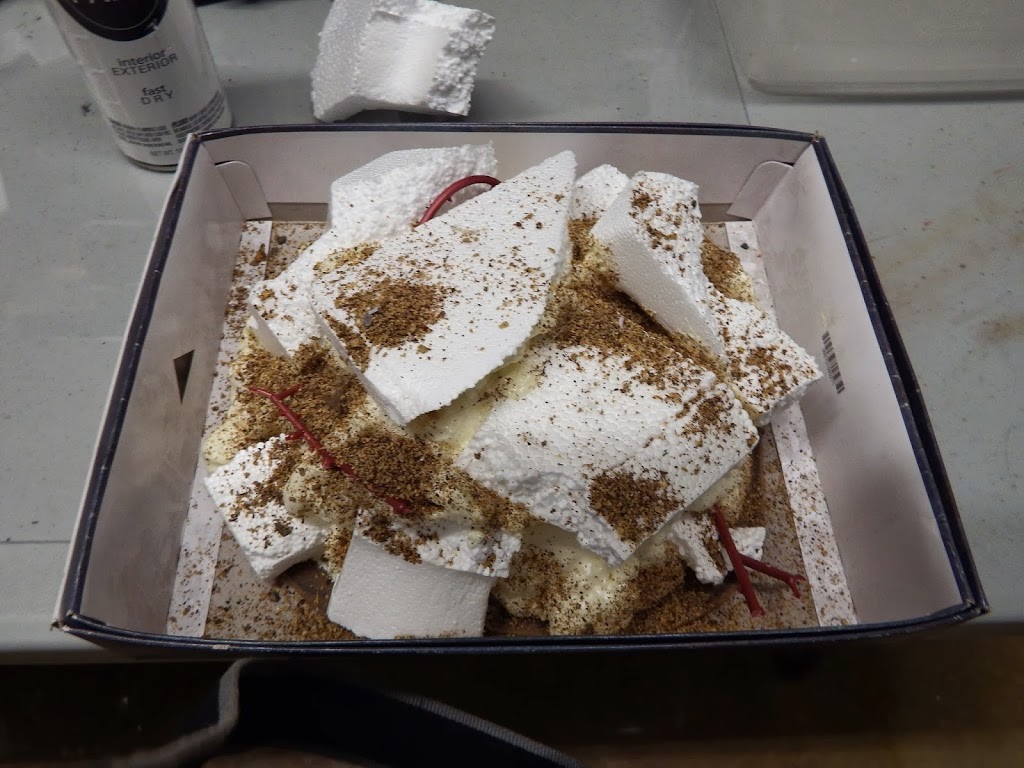
While the foam is still malleable (that’s fancy talk for squishy) apply some basing material. Be generous. The holidays are coming up and your want to get all that generosity out of the way now.
Okay. That should have taken you less than five minutes. At this point the hill is done. Now all you have to do is paint it.
Oh, what, you thought that was part of the five minutes? How misleading of me . . .
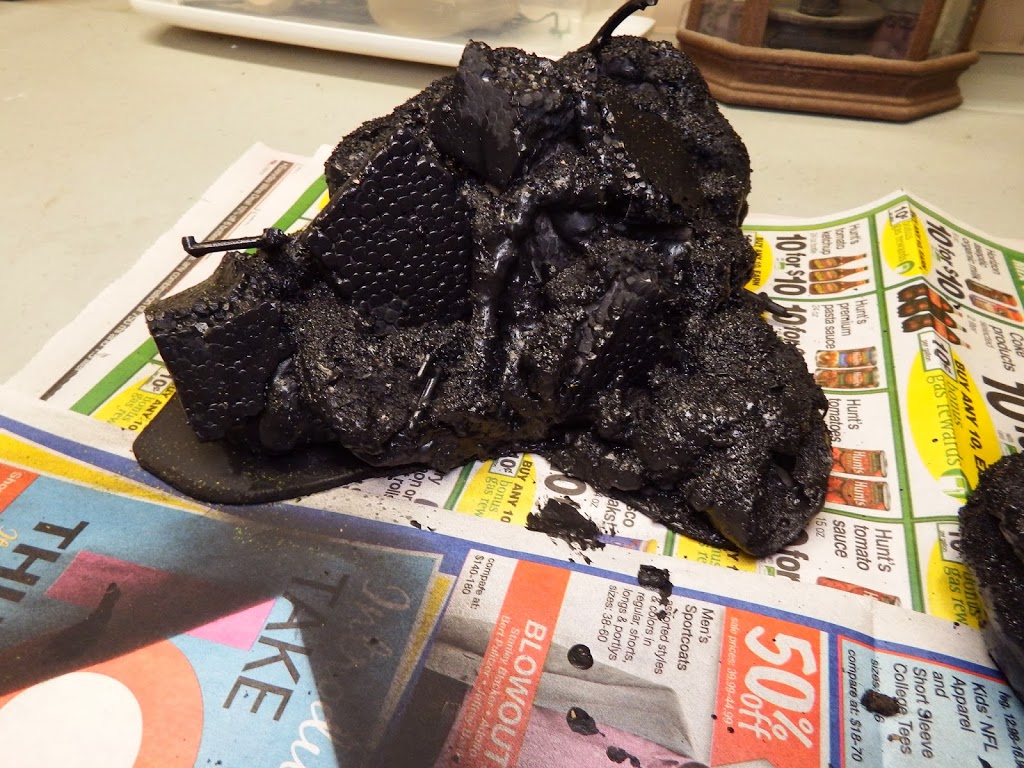
So, let the hill dry through your night terrors, and when you wake up in a cold sweat, apply a thick layer of black spray paint. The cheaper the better.
Yes, the spray paint will dissolve the foam. You want that to happen. The solvent will partially erode the foam. This is desirable to help give the foam a less ’round look.
Once that’s dry, take some cheap black paint (interior paint from your garage, or craft/hobby paint is fine) to touch up any areas where the foam shows through..
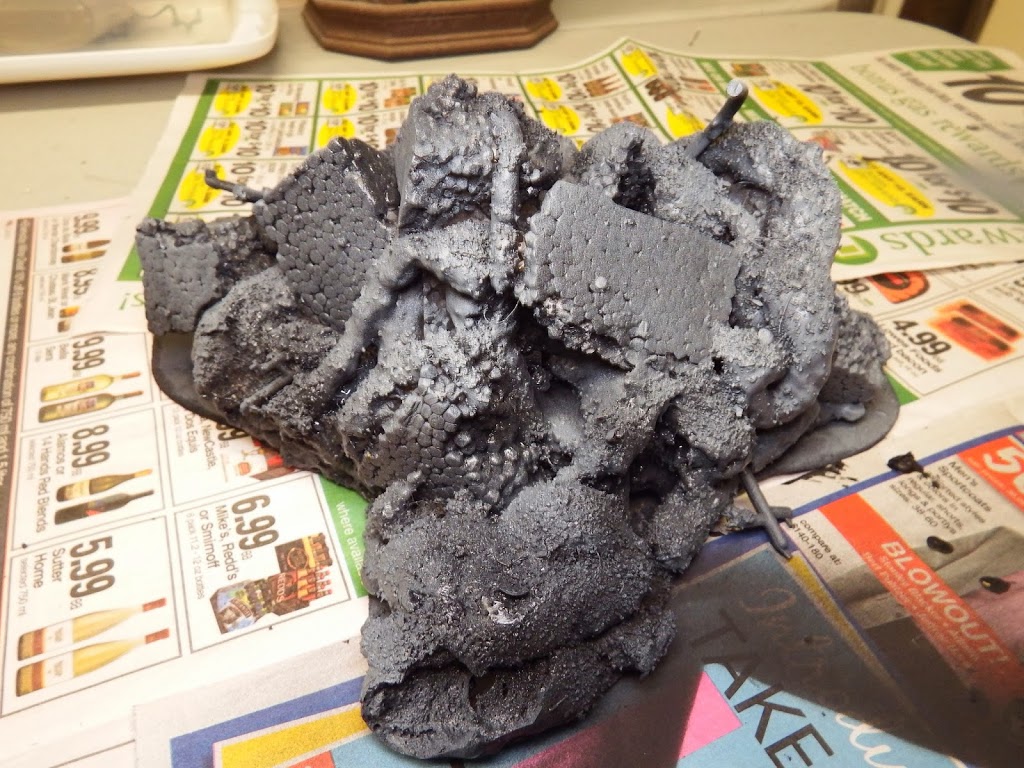
Once you have a good layer of black down, find some grey paint. Dark preferably. Dry brush or overspray some grey paint onto some of the surfaces. If you spray paint this, it will dissolve the foam further. So do so at your own risk.
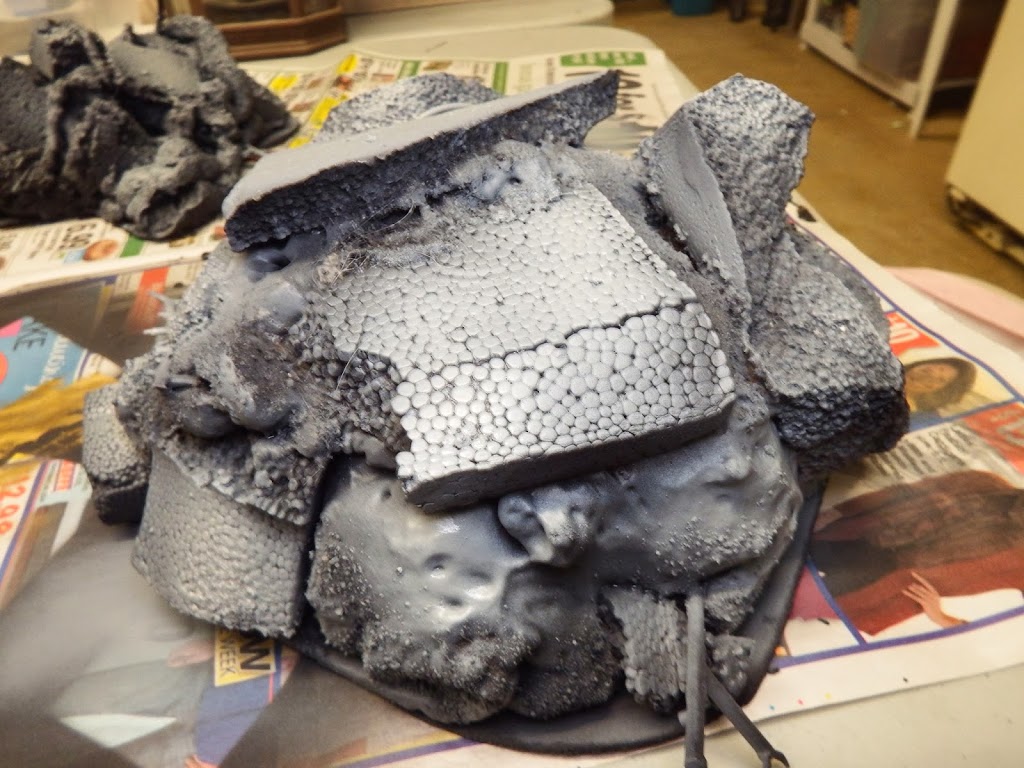
Then, if you really want the gold star, do it again with an even lighter grey paint. Let’s call this light grey, and let’s call this technique highlighting.
That’s it, your done. What, did you expect fireworks? It’s a hill, not the Mona Lisa.
Build a bunch, impress your mom. Move out for God’s sake.
If you liked this tutorial, then check out more of our work here and here!
Help us reach 100 likes and qualify for chance to win AMC Movie Tickets!!
They like us, they really like us! Let it never be said that we don’t reward our loyal subscribers!
White Metal Games is closing in on the 100+ Likes on Facebook. A small milestone for some, but for us this has been a long time coming. Longer than we’d like to admit . . .
To celebrate this milestone, we will be giving away two AMC Theatre Gold Experience Tickets to one lucky subscriber that likes us on facebook!
STEP 2: Leave a comment ON THE FACEBOOK PAGE under the post titled THE GOLDEN TICKET about what you’d like to see from us in the future. More conversions? More painting? More armies? More terrain? You name it and we’ll try our best to make your dreams come true!
STEP 3: Once we hit 100+ likes, we do a video where we randomly select one lucky LikeR who also posted on the facebook page under the GOLDEN TICKET heading to receive the tickets.
It’s that simple!
Good luck and thanks for supporting us so far!
Remember, we are currently accepting commissions. Don’t hesitate to contact us for a hasslefree quote!
In this episode we speak with Tristan Morris and Allen Clark of Proxy Army. Proxy Army is a new venture aiming to create custom minis for all wargaming systems using 3D technology to help gamers design custom minis any way they like! That’s right, you make the mini, you make the choices.
If you want to know more about Proxy Army be sure to visit their website: http://proxyarmy.com
AUTHOR’S NOTE: This recording is lower quality than our normal podcasts due to tech issues. Sadly, we did not speak nicely to the machine gods . . BUT FEAR NOT! You can also watch the interview in a series of three videos on our youtube page!
You can stream the episode from the White Metal Games Website, here.
Alternately you can also listen to the episode on Itunes.
War Council is a new podcast about 40k and things wargaming related. Justin was a one time client of Caleb’s that stuck around long enough for Caleb to ask him to do a podcast with him. Episodes revolve more around the hobby and fluff aspect of wargaming, and part of each episode follows the progress of White Metal Games as it tries to make a place for itself in a sea of miniature painting services.
This website uses cookies to improve your experience. By using this website you agree to accepting cookies. For more information on the cookies we use, see our Privacy Policy. Close
Privacy & Cookies Policy
Privacy Overview
This website uses cookies to improve your experience while you navigate through the website. Out of these cookies, the cookies that are categorized as necessary are stored on your browser as they are essential for the working of basic functionalities of the website. We also use third-party cookies that help us analyze and understand how you use this website. These cookies will be stored in your browser only with your consent. You also have the option to opt-out of these cookies. But opting out of some of these cookies may have an effect on your browsing experience.
Necessary cookies are absolutely essential for the website to function properly. This category only includes cookies that ensures basic functionalities and security features of the website. These cookies do not store any personal information.
Any cookies that may not be particularly necessary for the website to function and is used specifically to collect user personal data via analytics, ads, other embedded contents are termed as non-necessary cookies. It is mandatory to procure user consent prior to running these cookies on your website.